

Are you looking to start a fitness journey but unsure where to begin? Look no further than the “Beginner’s Guide To Strength Training.” This comprehensive guide is designed specifically for beginners who are eager to enhance their strength and improve overall fitness. From learning the basics to mastering essential techniques, this article will equip you with the knowledge and confidence to kickstart your strength training journey. Get ready to unleash your inner strength and transform your body like never before!
Benefits of Strength Training
Improves muscle strength and tone
Strength training is a form of exercise that involves using resistance to build and strengthen your muscles. By regularly engaging in strength training exercises, you can increase both your muscle strength and tone. This means that you’ll not only become stronger, but you’ll also develop more definition and shape in your muscles. Whether you’re looking to sculpt your arms, build a stronger core, or enhance your leg muscles, strength training can help you achieve your goals.
Increases bone density
Strength training doesn’t just benefit your muscles, it also has a positive impact on your bones. As you age, your bone density tends to decrease, which can increase your risk of fractures and osteoporosis. By incorporating strength training into your fitness routine, you can help maintain or even increase your bone density. When you perform strength exercises, it puts stress on your bones, which in turn stimulates the production of new bone cells, making your bones stronger and less prone to fractures.
Enhances weight management
Strength training can be a valuable tool in managing and maintaining a healthy weight. While cardio exercises like running and cycling are often associated with burning calories, strength training also plays a crucial role in weight management. When you engage in strength exercises, you not only burn calories during the workout but also continue to burn calories even after your workout is over. This is because strength training helps to increase your muscle mass, and muscles burn more calories at rest than fat. By building lean muscle mass, you can boost your metabolism and effectively manage your weight.
Boosts metabolism
Metabolism refers to the process by which your body converts the food you eat into energy. Having a faster metabolism can help you burn more calories throughout the day. One of the advantages of strength training is that it can significantly increase your metabolic rate. When you perform strength exercises, your body requires more energy to repair and rebuild your muscles after the workout. This increase in energy expenditure leads to a temporary boost in your metabolism, even hours after you’ve finished exercising. By incorporating strength training into your fitness routine, you can effectively increase your metabolic rate and burn more calories.
Improves cardiovascular health
While many people associate cardiovascular exercises like running or cycling with improving cardiovascular health, strength training can also have a positive impact. When you engage in strength exercises, your heart rate increases, which improves your cardiovascular system’s efficiency. Additionally, strength training can help lower blood pressure and improve blood circulation. By incorporating strength training into your overall fitness routine, you can improve your cardiovascular health and reduce the risk of heart disease.
Understanding Strength Training
Definition of strength training
Strength training, also known as resistance training or weight training, is a form of exercise that focuses on building and strengthening your muscles. It involves using resistance, such as weights, resistance bands, or bodyweight, to create tension in your muscles. This tension stimulates muscle growth, increases strength, and improves overall physical fitness.
Different types of strength training
There are various types of strength training exercises that target different muscle groups and use different equipment. Some common types of strength training include:
-
Free weights: This includes exercises performed with dumbbells and barbells, which provide constant resistance throughout the movement and engage multiple muscle groups.
-
Resistance bands: These elastic bands provide variable resistance and can be used to target specific muscle groups or assist with full-body workouts.
-
Machines: Strength training machines are designed to isolate specific muscle groups and provide controlled resistance. They are often found in gyms and fitness centers.
-
Bodyweight exercises: These exercises use your own body weight as resistance and can be performed anywhere. Examples include push-ups, squats, and lunges.
Importance of proper form
When it comes to strength training, proper form is crucial to avoid injuries and get the most out of your workouts. Performing exercises with incorrect form can put unnecessary stress on your joints and muscles, leading to strains or sprains. It’s essential to learn and practice the correct form for each exercise to ensure maximum effectiveness and safety. If you’re new to strength training, consider working with a fitness professional or trainer who can guide you through proper form and technique.
Progressive overload principle
The principle of progressive overload is a fundamental concept in strength training. It involves gradually increasing the demands placed on your muscles in order to stimulate growth and adaptation. When you consistently challenge your muscles with more resistance than they are accustomed to, they respond by getting stronger and more efficient. This can be achieved by gradually increasing the weight, the number of repetitions, or the sets of exercises you perform. By applying the principle of progressive overload, you can continue to make progress and avoid plateauing in your strength training journey.

Setting Goals and Planning
Identifying your fitness goals
Before starting a strength training program, it’s important to identify your fitness goals. What do you want to achieve? Do you want to build overall strength, increase muscle mass, or improve specific areas of your body? Understanding your goals will help you tailor your workouts and choose the right exercises to specifically target those areas. Whether it’s improving your upper body strength, toning your core, or increasing your overall fitness level, having clear goals will guide your training and keep you motivated.
Determining workout frequency and duration
Once you’ve established your fitness goals, it’s important to determine how often you’ll be strength training and how long each session will last. The frequency and duration of your workouts will depend on various factors, including your current fitness level, availability, and recovery time. It’s generally recommended to engage in strength training exercises at least two to three times per week, with each session lasting 30-60 minutes. However, it’s essential to listen to your body and allow for proper rest and recovery in between workouts.
Choosing the right exercises
Choosing the right exercises is key to achieving your fitness goals and ensuring a well-rounded strength training program. It’s important to select exercises that target different muscle groups and provide a balance of upper body, lower body, and core exercises. Some popular strength training exercises include squats, deadlifts, bench presses, shoulder presses, pull-ups, rows, planks, and push-ups. By incorporating a variety of exercises, you can maximize your results and avoid overworking certain muscle groups.
Warm-up and Cool-down
Importance of warming up
Before diving into your strength training workout, it’s essential to warm up your muscles and prepare your body for exercise. Warming up increases your heart rate, improves blood circulation, and loosens your joints. It can also help prevent injuries and enhance your overall performance during your workout. A proper warm-up should include dynamic movements that mimic the exercises you’ll be performing, such as arm swings, leg swings, and torso twists. Spend at least 5-10 minutes on your warm-up to ensure your muscles are properly prepared.
Dynamic warm-up exercises
Dynamic warm-up exercises involve moving your body through various ranges of motion to increase blood flow and activate your muscles. Some examples of dynamic warm-up exercises include jogging in place, high knees, butt kicks, walking lunges, and arm circles. These movements help increase your body’s temperature, improve flexibility, and prepare your muscles for the upcoming workout.
Purpose and benefits of cool-down
After completing your strength training workout, it’s essential to allocate time for a cool-down. Cooling down allows your heart rate and breathing to gradually return to normal and helps prevent blood pooling in your extremities. It also allows your muscles to relax and recover after the workout. A cool-down typically involves performing low-intensity exercises, such as walking or cycling, and static stretching.
Static stretching after workout
Static stretching involves holding a stretch for a prolonged period without any bouncing or movement. It helps improve flexibility, increase joint range of motion, and alleviate post-workout muscle tightness. After your strength training session, spend some time stretching the major muscle groups you worked on, such as your hamstrings, quadriceps, chest, shoulders, and back. Remember to hold each stretch for 15-30 seconds and breathe deeply during the stretch.

Basic Strength Training Exercises
Squat
The squat is a compound exercise that targets multiple muscle groups, including the quadriceps, hamstrings, glutes, and core. To perform a squat, stand with your feet shoulder-width apart, engage your core, and lower your body down as if you’re sitting back into a chair. Keep your chest lifted, knees tracking over your toes, and heels planted on the ground. Push through your feet to return to the starting position. Squats can be performed with bodyweight or with additional weight, such as dumbbells or barbells.
Deadlift
The deadlift is a powerful exercise that primarily targets the muscles of the posterior chain, including the hamstrings, glutes, and lower back. To perform a deadlift, start with your feet hip-width apart and grab a barbell with an overhand grip. Engage your core, keep your back straight, and hinge at the hips to lower the barbell towards the floor. Push through your heels and use your glutes and hamstrings to lift the barbell back to the starting position. Proper form and technique are crucial for safety and effectiveness when performing deadlifts.
Bench press
The bench press is a classic upper body exercise that primarily targets the chest muscles (pectoralis major and minor), front shoulder muscles, and triceps. To perform a bench press, lie on a flat bench with your feet planted on the ground and your back in contact with the bench. Grasp the barbell with a grip slightly wider than shoulder-width apart. Lower the barbell towards your chest, keeping your elbows at a 45-degree angle. Push the barbell back up to the starting position, fully extending your arms. If you’re a beginner, start with lighter weights or use a barbell with no added weight until you feel comfortable and confident with the movement.
Shoulder press
The shoulder press is an excellent exercise for targeting the muscles of the shoulders, including the deltoids and trapezius muscles. To perform a shoulder press, start by sitting or standing with your core engaged and a dumbbell in each hand, positioned just above your shoulders. Press the dumbbells overhead, fully extending your arms, without locking your elbows. Lower the dumbbells back to the starting position under control. For beginners, it’s important to start with lighter weights and focus on maintaining proper form throughout the exercise.
Pull-ups
Pull-ups are a challenging exercise that primarily targets the muscles of the upper back, including the latissimus dorsi, rhomboids, and biceps. You’ll need access to a pull-up bar or a sturdy overhead bar to perform this exercise. Grasp the bar with an overhand grip, slightly wider than shoulder-width apart. Hang with your arms fully extended, engage your core, and pull your body upwards until your chin clears the bar. Lower yourself back down to the starting position in a controlled manner without swinging. If you’re unable to perform a full pull-up, you can start with assisted variations or use resistance bands to gradually build upper body strength.
Rows
Rows are a compound exercise that targets the muscles of the upper back, including the rhomboids, trapezius muscles, and biceps. You can perform rows using a barbell, dumbbells, or resistance bands. To do a bent-over row, stand with your feet hip-width apart, hinge at the hips, and maintain a slight bend in your knees. Hold the weight of choice with your hands slightly wider than shoulder-width apart. Keep your core engaged and your back straight as you pull the weight towards your body, squeezing your shoulder blades together. Lower the weight back down to the starting position with control.
Planks
Planks are a popular exercise for strengthening the core muscles, including the abdominals, obliques, and lower back. To perform a plank, start in a push-up position with your hands directly under your shoulders and your toes on the ground. Engage your core, glutes, and legs to keep your body in a straight line from head to heels. Hold this position for as long as you can while maintaining proper form and breathing steadily. Planks can be modified by dropping down to your forearms or performing the exercise with your knees on the ground.
Push-ups
Push-ups are a compound exercise that targets multiple muscle groups, including the chest, shoulders, triceps, and core. To perform a push-up, start in a high plank position with your hands directly under your shoulders and your feet together or slightly apart. Lower your body towards the ground by bending your elbows while keeping your core engaged and your back straight. Push yourself back up to the starting position by fully extending your arms. If you’re a beginner, you can modify push-ups by performing them with your knees on the ground or using an elevated surface, such as a bench or step.
Proper Technique and Form
Learning the correct form for each exercise
When it comes to strength training, learning and practicing correct form is crucial for maximizing your results and preventing injuries. Each exercise has specific form cues and techniques that should be followed. It’s important to familiarize yourself with the proper form for each exercise, focusing on maintaining proper alignment, engaging the correct muscles, and avoiding compensatory movements. If you’re unsure about the proper form, consider working with a fitness professional or trainer who can guide you through the movements and provide feedback.
Importance of engaging the right muscles
Engaging the right muscles is essential for effective strength training. When performing each exercise, it’s important to focus on the targeted muscle groups and ensure that they are properly activated. For example, during a squat, you should be driving through your heels and engaging your glutes and quadriceps to lift your body back up. By consciously engaging and activating the muscles you’re targeting, you can ensure that you’re getting the most out of each exercise and avoiding compensation from other muscle groups.
Avoiding common mistakes
Strength training can be complex, and it’s common for beginners to make certain mistakes when first starting out. Some common mistakes to avoid include using incorrect form, lifting weights that are too heavy, not warming up adequately, and neglecting rest and recovery. It’s important to be mindful of proper technique, start with weights that are challenging but manageable, warm up properly before each session, and allow for adequate rest days to prevent overtraining and reduce the risk of injuries.
Progressive Overload
Definition and importance of progressive overload
Progressive overload is the principle of gradually increasing the demands placed on your muscles to stimulate growth and adaptation. By consistently challenging your muscles with progressively more weight, repetitions, or sets over time, you can continually make progress in your strength training journey. This principle is essential for preventing plateaus and ensuring continued improvements in strength and muscle development.
Increasing weight, reps, or sets over time
To apply the principle of progressive overload, you can increase the weight, the number of repetitions, or the number of sets in your strength training exercises. For example, if you’re squatting with a weight of 50 pounds, you can gradually increase it to 60 pounds as your strength improves. Similarly, if you’re performing 10 repetitions of an exercise, you can aim to increase it to 12 repetitions. Adding an extra set to your workout routine can also provide an additional challenge for your muscles. Experiment with different strategies and find a progression scheme that works best for you.
Tracking progress and making adjustments
In order to effectively apply progressive overload, it’s important to track your progress and make adjustments as needed. Keeping a workout journal or using a fitness tracking app can help you log your exercises, weights, and repetitions, allowing you to monitor your progress over time. Based on your progress, you can then make adjustments to your workouts by increasing the weight, the number of repetitions, or the number of sets. Consistently tracking your progress and making incremental adjustments will ensure that you’re consistently challenging your muscles and making progress in your strength training journey.
Choosing the Right Equipment
Dumbbells
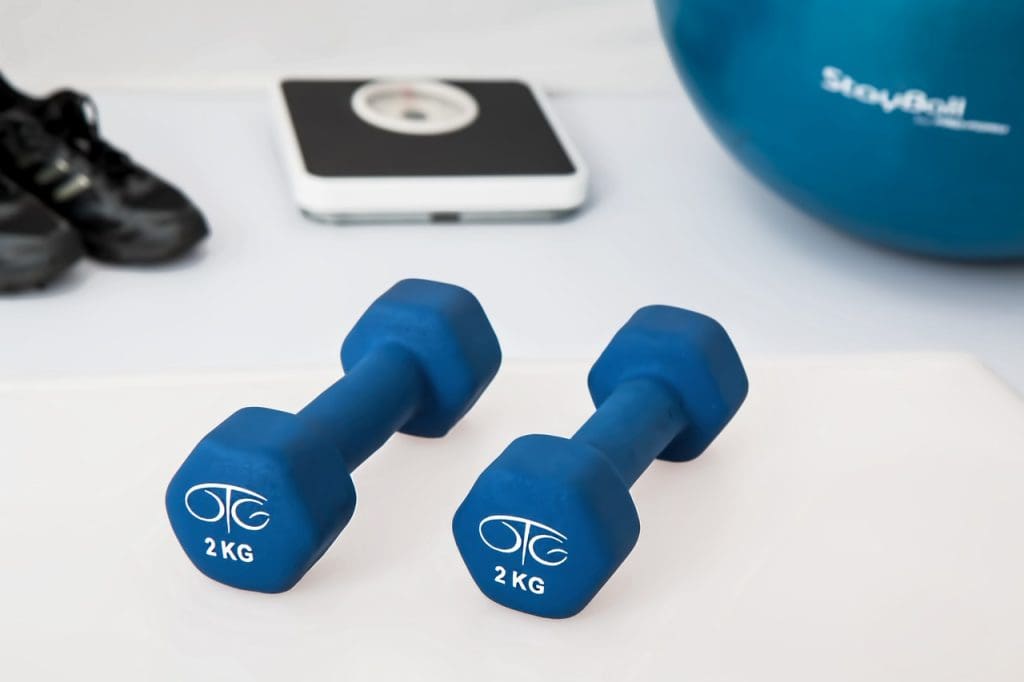
Dumbbells are versatile pieces of equipment that can be used for a wide range of strength training exercises. They come in various weights and can be used individually or in pairs. Dumbbells allow for greater freedom of movement and engage the stabilizing muscles in your arms, making them an excellent choice for targeting specific muscle groups and improving overall strength.
Barbells
Barbells are long metal bars with weight plates on each end. They are commonly used for compound exercises like squats, deadlifts, and bench presses. Barbells provide a stable and secure grip, allowing you to lift heavier weights and engage multiple muscle groups simultaneously. They are ideal for building overall strength and muscle mass.
Resistance bands
Resistance bands are elastic bands that provide resistance when stretched. They come in various levels of resistance and can be used to target specific muscle groups or assist with full-body workouts. Resistance bands are lightweight, portable, and versatile, making them suitable for both beginners and advanced strength trainers.
Machines
Strength training machines are designed to isolate specific muscle groups and provide controlled resistance. They often have adjustable seats, handles, and weight stacks. Machines are ideal for beginners or individuals who prefer a guided range of motion while performing exercises. They can be effective in targeting specific muscle groups, but they may not engage the stabilizing muscles as much as free weights.
Kettlebells
Kettlebells are cast-iron weights that resemble a cannonball with a handle. They are versatile and can be used for a range of exercises, including swings, snatches, and presses. Kettlebell exercises require full-body engagement and can help improve strength, power, and mobility.
Weightlifting belt
A weightlifting belt is a supportive belt worn around the lower back and abdomen during heavy lifting exercises. It provides additional support and stability to the core, reducing the risk of injury. Weightlifting belts are commonly used during exercises like squats and deadlifts.
Designing a Strength Training Program
Split routine vs. full-body workout
When designing a strength training program, you have the option to follow a split routine or a full-body workout. A split routine involves targeting specific muscle groups on different days of the week. For example, you may dedicate one day to upper body workouts and another day to lower body workouts. On the other hand, a full-body workout involves targeting all major muscle groups in each session. The choice between a split routine and a full-body workout depends on your goals, availability, and personal preferences.
Choosing the right exercises for each muscle group
To ensure a well-rounded strength training program, it’s important to choose exercises that target all major muscle groups. This includes exercises for the chest, back, shoulders, arms, legs, and core. When selecting exercises, choose a variety of compound and isolation exercises that engage different muscle groups. For example, include exercises like bench press, rows, shoulder press, squats, and planks. By incorporating a balanced mix of exercises, you can effectively work all major muscle groups and maximize your results.
Determining sets, reps, and rest periods
The number of sets, repetitions, and rest periods you choose for each exercise can greatly impact your strength training results. The number of sets and repetitions will depend on your fitness level, goals, and the intensity of the exercise. Generally, beginners can start with 2-3 sets of 8-12 repetitions for each exercise, while more advanced individuals may benefit from higher volume training. Rest periods between sets should be between 30 seconds to 2 minutes, depending on the intensity and your recovery needs. Experiment with different set and repetition ranges to find what works best for your body and goals.
Integrating cardio and flexibility training
While strength training is important for building muscle and strength, it’s also essential to include cardiovascular and flexibility training in your overall fitness routine. Cardiovascular exercises like running, swimming, or cycling can help improve your overall cardiovascular health, burn additional calories, and assist in weight management. Flexibility training, such as stretching or yoga, can improve joint range of motion, prevent injuries, and reduce muscle soreness. Finding a balance between strength training, cardiovascular exercise, and flexibility training will help you achieve a well-rounded and comprehensive fitness routine.
Safety, Injury Prevention, and Recovery
Importance of proper warm-up and cool-down
Proper warm-up and cool-down protocols are essential for preventing injuries and optimizing recovery. By properly warming up your muscles before exercise, you increase blood flow, improve flexibility, and prepare your body for the upcoming workout. Cooling down after exercise helps your heart rate and breathing return to normal gradually and prevents blood pooling. It also allows your muscles to relax and aids in the recovery process. Make sure to allocate time for warm-up and cool-down in every strength training session.
Listening to your body and avoiding overtraining
Listening to your body is important when it comes to strength training. It’s crucial to pay attention to any warning signs of overtraining, such as persistent muscle soreness, decreased performance, fatigue, or elevated resting heart rate. Overtraining can lead to injuries, burnout, and hinder progress. It’s important to allow for adequate rest and recovery days between workouts, adjust exercise intensity and volume as needed, and practice self-care, such as getting enough sleep and proper nutrition, to support your body’s recovery process.
Proper nutrition and hydration
Proper nutrition and hydration play a vital role in strength training and overall health. A balanced diet that includes an adequate amount of protein, carbohydrates, and healthy fats is essential for muscle growth, repair, and recovery. Consuming a nutritious pre-workout meal or snack can provide the energy you need for your strength training session. Staying hydrated throughout your workout is also important to maintain performance and prevent dehydration. Remember to drink water before, during, and after your workout to replenish fluids lost through sweat.
Rest, sleep, and recovery
Rest and recovery are just as important as the actual workout when it comes to strength training. Your muscles need time to repair and grow stronger after each session. Aim for at least one to two days of rest between strength training sessions to allow for adequate recovery. During rest days, engage in light activities like walking or stretching to promote blood flow and aid in recovery. Additionally, prioritize getting enough sleep, as quality sleep is crucial for muscle growth, hormone regulation, and overall recovery.
Seeking professional guidance when needed
If you’re new to strength training or have specific fitness goals, it’s beneficial to seek professional guidance. Working with a fitness professional or personal trainer can help ensure that you’re using proper form, progressing effectively, and avoiding injuries. They can also create a tailored strength training program based on your goals, fitness level, and any specific limitations or considerations you may have. Investing in professional guidance can provide the knowledge, accountability, and support you need to excel in your strength training journey.
In conclusion, strength training offers a multitude of benefits, including improved muscle strength and tone, increased bone density, enhanced weight management, boosted metabolism, and improved cardiovascular health. Understanding the principles and techniques of strength training, setting clear goals, planning a well-rounded workout program, and prioritizing safety, injury prevention, and recovery are key components in achieving success. Whether you’re a beginner or an experienced strength trainer, incorporating strength training into your fitness routine can lead to long-term health and fitness improvements. So get started today, and enjoy the many benefits that strength training has to offer!