
Welcome to a beginner’s guide to the most popular yoga poses! This article will introduce you to some of the foundational poses that are perfect for those just starting their yoga journey. From Downward Dog to Warrior 2, these poses will help you build strength, flexibility, and a sense of inner peace. So roll out your mat, take a deep breath, and let’s get started on your yoga practice! Have you been wanting to try yoga but not sure where to start? As a beginner, it can be overwhelming to dive into the world of yoga with so many poses to choose from. But fear not, we’ve got you covered with the most popular yoga poses for beginners to kickstart your yoga journey.

Starting Your Yoga Journey
Embarking on a yoga journey can be a transformative experience for both body and mind. It’s important to lay a strong foundation by starting with beginner-friendly poses that focus on building strength, flexibility, and mindfulness. These poses will help you establish a solid practice and pave the way for more advanced poses down the road.
Setting Up Your Space
Before you begin practicing yoga, it’s essential to create a calming and comfortable environment in which to practice. Find a quiet space in your home with minimal distractions, roll out your yoga mat, and maybe even light a scented candle or play some soothing music to enhance the overall experience. Creating a serene atmosphere will help you get the most out of your practice.
10 Most Popular Yoga Poses for Beginners
Now that you’re all set up and ready to begin your yoga journey, let’s dive into the 10 most popular yoga poses for beginners. These poses are beginner-friendly, safe, and effective in helping you build strength, flexibility, and balance while fostering a sense of peace and tranquility.
| Pose | Benefits |
|---|---|
| Mountain Pose (Tadasana) | Improves posture and concentration |
| Downward Facing Dog (Adho Mukha Svanasana) | Stretches the entire body and relieves stress |
| Child’s Pose (Balasana) | Relaxes the mind and stretches the back |
| Warrior II (Virabhadrasana II) | Strengthens the legs and opens up the hips |
| Tree Pose (Vrksasana) | Improves balance and focus |
| Cobra Pose (Bhujangasana) | Strengthens the back and opens up the chest |
| Bridge Pose (Setu Bandhasana) | Stretches the chest, neck, and spine |
| Cat-Cow Pose (Marjaryasana-Bitilasana) | Improves spinal flexibility and coordination |
| Seated Forward Bend (Paschimottanasana) | Stretches the spine and hamstrings |
| Legs Up the Wall Pose (Viparita Karani) | Relieves stress and soothes the nervous system |
Mountain Pose (Tadasana)
Begin standing tall with your feet together, grounding yourself into the earth. Engage your core, lift your chest, and relax your shoulders, gazing straight ahead. Mountain pose is a foundational pose that teaches you proper alignment and posture, setting the tone for the rest of your practice.
Downward Facing Dog (Adho Mukha Svanasana)
Starting on your hands and knees, lift your hips upward while pressing your palms into the mat. Keep your knees slightly bent and heels reaching towards the ground. Downward facing dog is a full-body stretch that strengthens the arms, shoulders, and back while calming the mind and reducing stress.
Child’s Pose (Balasana)
Kneel on the mat, sit on your heels, and lower your forehead to the ground with your arms extended in front of you. Child’s pose is a resting pose that stretches the back, hips, and thighs while promoting relaxation and a sense of surrender. It’s a great pose to come back to at any point during your practice.
Warrior II (Virabhadrasana II)
From a standing position, step your feet wide apart, turn your front foot forward, and bend your front knee at a 90-degree angle. Extend your arms out to the sides, gaze over your front fingertips, and sink into a deep lunge. Warrior II strengthens the legs, opens up the hips, and builds focus and concentration.
Tree Pose (Vrksasana)
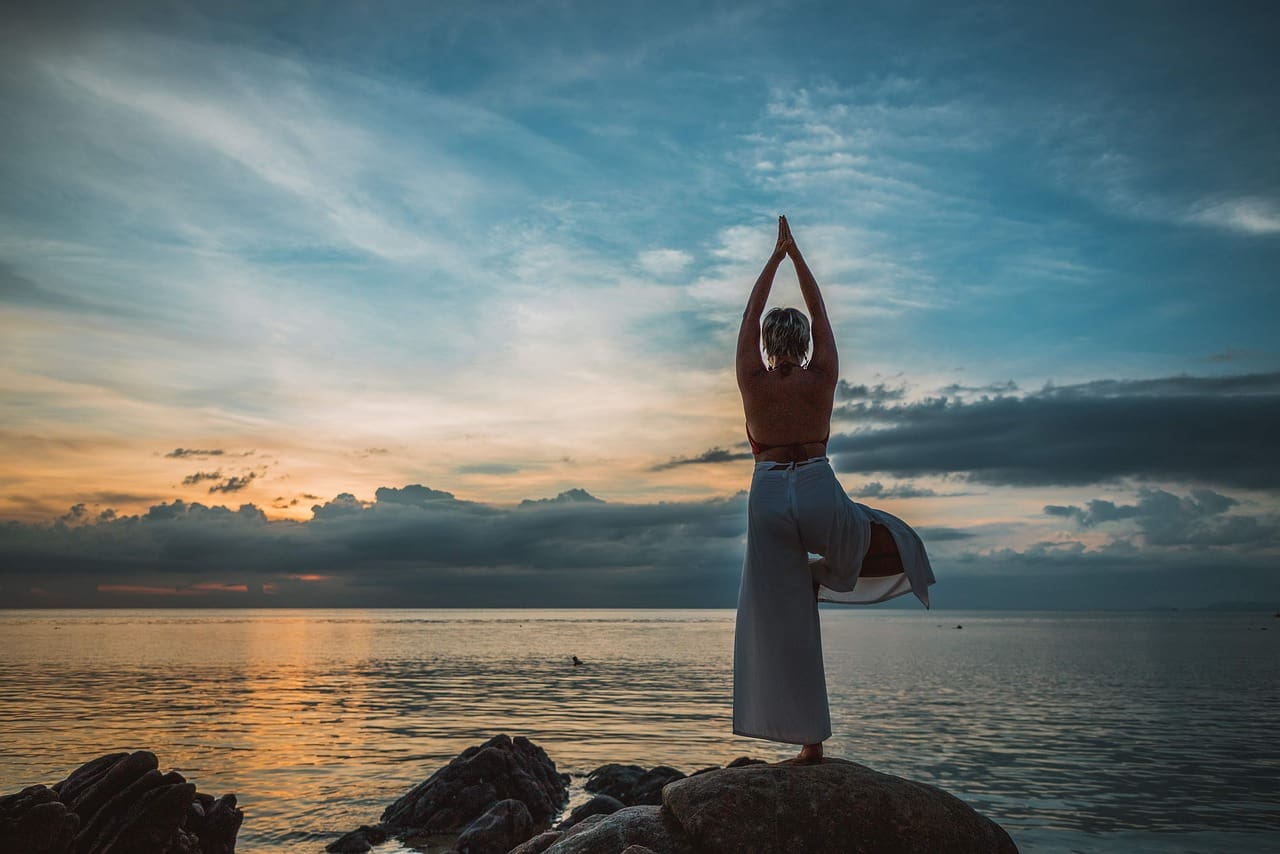
Shift your weight onto one foot, bring the sole of your other foot to your inner thigh or calf, and press your palms together at your heart center. Tree pose improves balance, stability, and concentration by grounding down into the earth while reaching up towards the sky. It’s a great pose to practice mindfulness and focus.
Cobra Pose (Bhujangasana)
Lie on your stomach with your hands under your shoulders, press into your palms, and lift your chest off the mat while keeping your elbows close to your body. Cobra pose strengthens the back, opens up the chest, and improves posture by counteracting the effects of sitting and slouching.
Bridge Pose (Setu Bandhasana)
Lie on your back with your knees bent and feet hip-distance apart, press into your feet, lift your hips towards the sky, and interlace your hands underneath you. Bridge pose stretches the chest, neck, and spine while strengthening the back, glutes, and hamstrings. It’s a great pose for releasing tension in the back and shoulders.
Cat-Cow Pose (Marjaryasana-Bitilasana)
Start on your hands and knees, round your back towards the ceiling (cat pose) on an exhale, and arch your back with your gaze lifted (cow pose) on an inhale. Cat-cow pose improves spinal flexibility, coordination, and awareness by moving the spine through flexion and extension. It’s a gentle warm-up for the spine before more challenging poses.
Seated Forward Bend (Paschimottanasana)
Sit on the mat with your legs extended in front of you, hinge at the hips, and fold forward over your legs while keeping your spine long. Seated forward bend stretches the spine, hamstrings, and calves while calming the mind and relieving stress. It’s a great pose to practice surrendering and letting go.
Legs Up the Wall Pose (Viparita Karani)
Lie on your back with your legs extended up against a wall, relax your arms by your sides, and close your eyes. Legs up the wall pose promotes relaxation, improves circulation, and soothes the nervous system by allowing blood to flow back towards the heart and brain. It’s a gentle inversion that can help reduce swelling in the legs and feet.
Finding Your Flow
After familiarizing yourself with the most popular yoga poses for beginners, it’s time to start incorporating them into a sequence or flow. A yoga flow is a series of poses that are linked together in a mindful and flowing manner, moving with the breath and creating a sense of fluidity and connection. Here are a few tips for finding your flow as a beginner yogi:
Breath Awareness
Focus on your breath as you move through each pose, inhaling deeply to expand the lungs and exhaling fully to release tension and stress. Match your movements with your breath, allowing it to guide you through the flow and create a sense of ease and grounding.
Gentle Transitions
Take your time transitioning between poses, moving mindfully and intentionally to avoid rushing or forcing your body into uncomfortable positions. Listen to your body’s cues and make adjustments as needed to find a balance between effort and ease.
Modifications and Props
Don’t be afraid to use props such as blocks, straps, or bolsters to support your practice and make poses more accessible. Modify poses as needed to suit your body and level of flexibility, and remember that yoga is a personal journey that looks different for everyone.
Listen to Your Body
Above all, listen to your body and honor its limitations without judgment or comparison. Your yoga practice is a reflection of your unique body, mind, and spirit, so give yourself permission to move in a way that feels good and serves your well-being.
Conclusion
Congratulations on taking the first step towards your yoga journey by exploring the most popular yoga poses for beginners. As you continue to practice and grow in your yoga practice, remember to approach each pose with an open heart, a curious mind, and a compassionate spirit. Yoga is a transformative practice that can benefit you physically, mentally, and emotionally, so enjoy the journey and embrace the process of self-discovery and self-care. Namaste.