
So, you’ve decided to get into fitness and start building some muscle. That’s great! But where do you even begin? With so many exercises out there, it can be overwhelming to know which ones are best for beginners. Well, fear not. In this article, we’ve rounded up the top 5 muscle-building exercises that are perfect for those just starting their fitness journey. From squats to push-ups, these exercises will help you build strength, tone your muscles, and lay the foundation for a strong and healthy body. Get ready to sweat and see those gains!
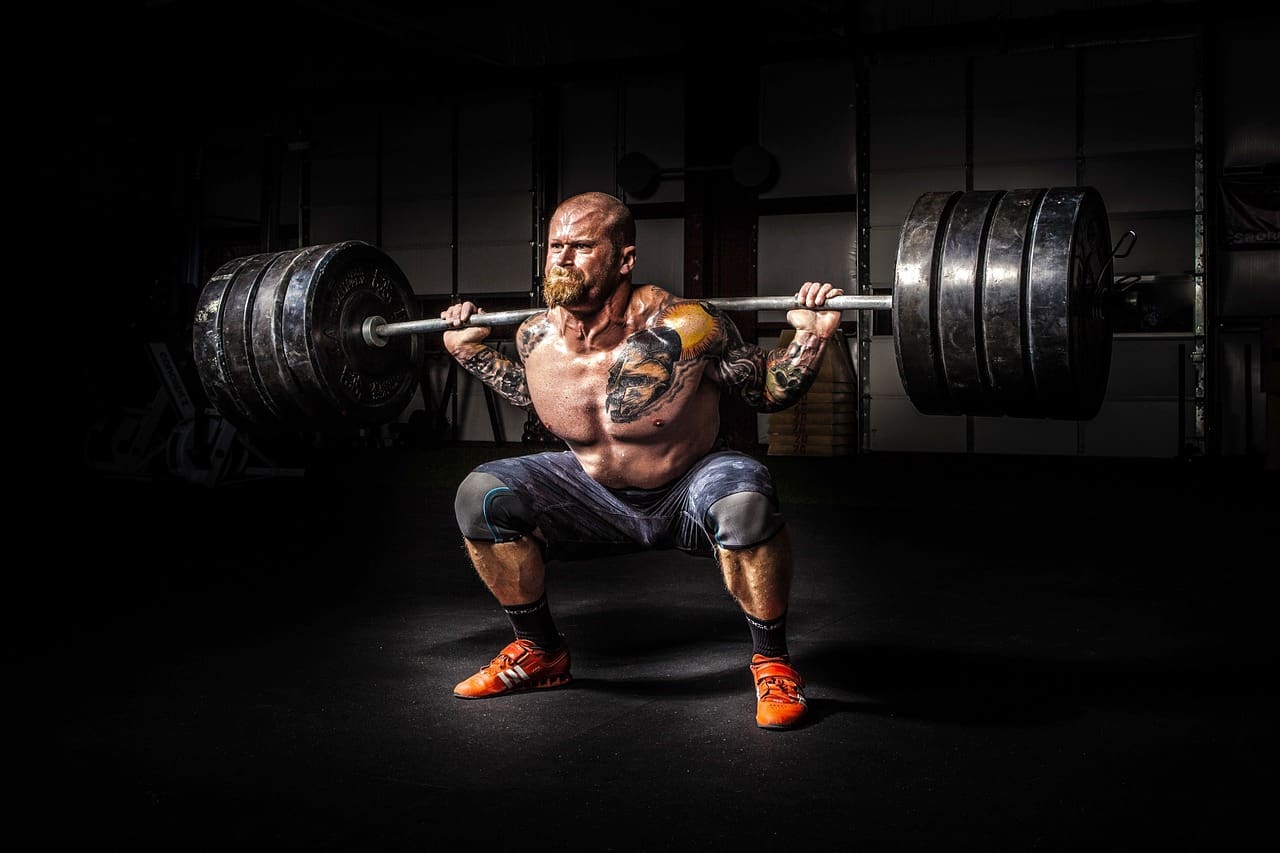
Squats
Benefits of Squats
Squats are one of the most effective exercises for building overall strength and muscle. The benefits of incorporating squats into your workout routine are numerous. Firstly, squats target multiple muscle groups, including the quadriceps, hamstrings, glutes, calves, and core. By engaging these different muscle groups, squats help to improve your overall lower body strength and stability.
Moreover, squats are a compound exercise, meaning they work multiple joints and muscle groups simultaneously. This not only makes your workout more efficient but also helps to increase your overall power. Squats are also a functional exercise, mimicking movements we perform in our daily lives, such as standing up from a chair or lifting heavy objects. By incorporating squats into your routine, you can improve your everyday movements and reduce the risk of injuries.
Additionally, squats are known to stimulate the release of growth hormones, such as testosterone and human growth hormone. These hormones are essential for muscle growth and recovery, making squats an excellent exercise for those looking to build muscle. Furthermore, squats can also help to improve your balance, coordination, and flexibility, making them a versatile exercise for individuals of all fitness levels.
Proper Form and Technique
To perform squats with proper form and technique, follow these steps:
- Stand with your feet shoulder-width apart, toes pointing slightly outward.
- Keep your chest lifted, shoulders back, and gaze forward.
- Engage your core and maintain a neutral spine throughout the movement.
- Lower your hips back and down, as if you are sitting into a chair.
- Keep your knees aligned with your toes, ensuring they do not go past your toes.
- Lower yourself until your thighs are parallel to the ground, or as low as you can comfortably go.
- Push through your heels, engage your glutes and hamstrings, and return to the starting position.
- Repeat for the desired number of repetitions.
Remember, it is crucial to maintain proper form throughout the movement to maximize the benefits of squats and avoid injuries. If you are new to squats, it is always helpful to work with a certified personal trainer or fitness professional to ensure you are performing the exercise correctly.
Variations of Squats
There are various variations of squats that you can incorporate into your workout routine to add variety and target different muscle groups. Some popular variations include:
-
Sumo Squat: Stand with your feet wider than shoulder-width apart and toes pointing outwards. Perform the squat as usual, focusing on engaging your inner thighs and glutes.
-
Jump Squat: Begin with a regular squat, and as you come up, explode off the ground into a jump. This variation adds an element of cardio and explosiveness to your squat routine.
-
Single-Leg Squat: Stand on one leg and extend the other leg straight in front of you. Lower yourself into a squat position while keeping your balance on one leg. This variation helps to improve stability and mobility.
-
Goblet Squat: Hold a dumbbell or kettlebell close to your chest with both hands. Perform a regular squat, focusing on keeping your chest lifted and core engaged. This variation adds an extra challenge to your squat routine.
-
Pistol Squat: Begin by standing on one leg, extending the other leg straight in front of you. Lower yourself into a squat position while keeping the extended leg off the ground. This variation requires strength, balance, and flexibility.
By incorporating these variations, you can target specific muscle groups, increase the intensity of your squats, and keep your workout routine exciting and challenging.
Push-Ups
Benefits of Push-Ups
Push-ups are a classic exercise that is often overlooked but offers numerous benefits. They primarily target the chest, shoulders, triceps, and core muscles. One of the significant benefits of push-ups is their ability to strengthen the upper body, building muscle and increasing overall strength.
Push-ups also engage multiple muscle groups simultaneously, making them a compound exercise. This compound movement recruits more muscle fibers and helps to burn more calories compared to isolated exercises. Additionally, push-ups improve your functional strength, as they mimic movements used in daily activities such as pushing objects or lifting yourself off the ground.
Another advantage of push-ups is their versatility and accessibility. They can be performed anywhere, without the need for special equipment or a gym membership. Whether you are at home, in a park, or on vacation, you can always squeeze in a set of push-ups for an effective upper body workout.
Proper Form and Technique
To perform push-ups with proper form and technique, follow these steps:
- Start in a high plank position with your hands slightly wider than shoulder-width apart, fingers pointing forward.
- Engage your core, glutes, and legs, ensuring your body forms a straight line from your head to your heels.
- Lower your body by bending your elbows, keeping them close to your body, until your chest is just above the ground.
- Push through your hands, extending your arms and returning to the starting position.
- Keep your gaze slightly forward and avoid dropping or lifting your hips throughout the movement.
- Repeat for the desired number of repetitions.
Remember, maintaining proper form is crucial for maximizing the benefits of push-ups. If you are new to push-ups, you can start by performing modified push-ups on your knees or against a stable elevated surface, such as a bench or sturdy chair. Gradually, as you build strength, you can progress to performing standard push-ups.
Variations of Push-Ups
There are several variations of push-ups that you can incorporate into your workout routine to target different muscle groups and add variety. Some popular push-up variations include:
-
Wide Push-Up: Place your hands wider than shoulder-width apart, targeting the chest muscles more intensely.
-
Diamond Push-Up: Place your hands close together, forming a diamond shape with your index fingers and thumbs. This variation focuses on the triceps.
-
Incline Push-Up: Place your hands on an elevated surface such as a bench or step. This variation reduces the resistance and is suitable for beginners or individuals recovering from injuries.
-
Decline Push-Up: Place your feet on an elevated surface, such as a step or bench, with your hands on the ground. This variation places more emphasis on the shoulders and upper chest.
-
Plyometric Push-Up: Perform a standard push-up and explosively push off the ground, allowing your hands to leave the floor. This variation enhances power and explosiveness.
By incorporating these variations, you can target specific muscle groups, increase the difficulty of your push-up routine, and continuously challenge your body.
Deadlifts
Benefits of Deadlifts
Deadlifts are a compound exercise that primarily targets the posterior chain, including the glutes, hamstrings, and lower back. They also engage the core, quadriceps, and other stabilizing muscles. Deadlifts are often considered a full-body exercise, as they require muscle activation from head to toe.
One of the key benefits of deadlifts is their ability to build overall strength and muscle mass. Deadlifts target multiple muscle groups and work to increase both muscle size and strength. By incorporating deadlifts into your workout routine, you can develop a strong and muscular physique.
Moreover, deadlifts are known to improve overall functional strength, as they mimic movements we perform in our daily lives, such as lifting heavy objects from the ground. By strengthening the muscles involved in these movements, deadlifts can improve your performance in daily activities and reduce the risk of injuries.
Deadlifts are also effective for developing a strong and stable core. The movement requires the engagement of the core muscles to maintain proper form and stability. By consistently performing deadlifts, you can improve your core strength and enhance your overall athletic performance.
Additionally, deadlifts stimulate the release of growth hormones, such as testosterone and human growth hormone, which are essential for muscle growth and recovery. This makes deadlifts a valuable exercise for individuals looking to build muscle and increase their strength.
Proper Form and Technique
To perform deadlifts with proper form and technique, follow these steps:
- Stand with your feet shoulder-width apart, toes pointing slightly outward, and the barbell over your midfoot.
- Bend at the hips and knees, lowering your body until your hands grip the barbell just outside your knees.
- Engage your core and ensure your spine maintains a neutral position throughout the movement.
- Hinge at the hips and push through your feet, lifting the barbell up while keeping it close to your body.
- Extend your hips and knees until you are standing tall with the barbell hanging in front of your thighs.
- Reverse the movement by hinging at the hips and bending your knees, lowering the barbell back down to the starting position.
- Repeat for the desired number of repetitions.
It is crucial to maintain proper form throughout the movement to maximize the benefits of deadlifts and prevent injuries. If you are new to deadlifts, it is recommended to work with a certified personal trainer or fitness professional who can guide you in learning and executing the exercise correctly.
Variations of Deadlifts
There are several variations of deadlifts that you can incorporate into your workout routine to target different muscle groups and add variety. Some popular deadlift variations include:
-
Sumo Deadlift: Stand with a wider stance, toes pointing outward, and hands placed inside your thighs. This variation targets the inner thighs and glutes more intensely.
-
Romanian Deadlift (RDL): Use a narrower grip and maintain a slight knee bend throughout the movement. This variation places more emphasis on the hamstrings and glutes.
-
Trap Bar Deadlift: Utilize a specialized hexagonal bar, also known as a trap bar. This variation reduces the stress on the lower back and is beneficial for individuals with limited mobility or lower back issues.
-
Single-Leg Deadlift: Stand on one leg and hinge at the hips, lowering your upper body while extending the opposite leg behind you. This variation targets the hamstrings, glutes, and enhances balance and stability.
-
Snatch Grip Deadlift: Widen your grip on the barbell, similar to a snatch grip in Olympic weightlifting. This variation targets the upper back, shoulders, and grip strength.
By incorporating these variations, you can target specific muscle groups, increase the difficulty of your deadlift routine, and continue challenging your body.
Bench Press
Benefits of Bench Press
The bench press is a classic upper body exercise that primarily targets the chest, shoulders, and triceps. It is one of the most popular exercises in the weightlifting community, and for good reason. The bench press offers a wide range of benefits that can help you build strength and muscle.
One of the main advantages of the bench press is its ability to increase upper body strength. As a compound exercise, the bench press engages multiple muscle groups simultaneously, allowing you to lift heavy weights and develop overall strength. Regular bench pressing can lead to significant gains in chest, shoulder, and triceps strength.
Moreover, the bench press is an effective exercise for building muscle mass. By challenging your muscles with heavy weights, the bench press promotes muscle hypertrophy, helping you achieve a well-defined and muscular upper body. This makes it a popular exercise among individuals looking to increase their muscle size and improve their physique.
Additionally, the bench press is an excellent exercise for improving upper body power and explosiveness. By performing the bench press with controlled movements and explosive lifts, you can develop fast-twitch muscle fibers, which are responsible for quick and powerful movements. This can be beneficial for athletes participating in sports that require explosive upper body movements.
Another advantage of the bench press is its versatility. It can be performed with a barbell, dumbbells, or even resistance bands, allowing for variations and modifications based on your fitness level and equipment availability. This versatility makes the bench press accessible to individuals of all fitness levels, from beginners to advanced weightlifters.
Proper Form and Technique
To perform the bench press with proper form and technique, follow these steps:
- Lie flat on a bench with your eyes directly under the barbell.
- Place your feet on the ground, slightly wider than shoulder-width apart, and ensure your lower back is in contact with the bench.
- Grasp the barbell with a grip slightly wider than shoulder-width apart, elbows bent, and wrists aligned with your forearms.
- Engage your core, squeeze your shoulder blades together, and lift the barbell off the rack, holding it directly above your chest.
- Lower the barbell to your mid-chest, keeping your elbows at a 45-degree angle to your body.
- Pause for a brief moment, ensuring the barbell lightly touches your chest.
- Press the barbell back up to the starting position, extending your arms without fully locking out your elbows.
- Repeat for the desired number of repetitions.
Maintaining proper form throughout the movement is essential for maximizing the benefits of the bench press and preventing injuries. If you are new to the bench press, it is recommended to work with a certified personal trainer or fitness professional who can assess your form and guide you in executing the exercise correctly.
Variations of Bench Press
There are several variations of the bench press that you can incorporate into your workout routine to target different muscle groups and add variety. Some popular bench press variations include:
-
Incline Bench Press: Perform the bench press on an inclined bench, targeting the upper chest muscles more intensely.
-
Decline Bench Press: Perform the bench press on a declined bench, targeting the lower chest muscles more intensely.
-
Dumbbell Bench Press: Use dumbbells instead of a barbell to perform the bench press. This variation requires greater stabilization and activates additional muscles.
-
Close-Grip Bench Press: Place your hands closer together on the barbell, targeting the triceps more intensely.
-
Floor Press: Perform the bench press with your elbows resting on the floor, limiting the range of motion and focusing on the triceps and lockout strength.
By incorporating these variations, you can target specific muscle groups, increase the difficulty of your bench press routine, and keep your workout exciting.

Dumbbell Lunges
Benefits of Dumbbell Lunges
Dumbbell lunges are a fantastic exercise for building strength, improving balance, and targeting the lower body muscles. They primarily target the quadriceps, hamstrings, glutes, and calves, making them an excellent exercise for overall lower body development.
One of the key benefits of dumbbell lunges is their ability to strengthen and tone the leg muscles. By stepping forward and lowering your body, you engage the quadriceps and glutes, forcing them to work together to stabilize and power the movement. Regularly incorporating dumbbell lunges into your workout routine can lead to greater leg strength, muscle definition, and overall lower body development.
Moreover, dumbbell lunges are a functional exercise that mimics movements we perform in our daily lives, such as walking, climbing stairs, or getting up from a chair. By improving your strength and stability in these functional movements, dumbbell lunges can enhance your everyday activities and reduce the risk of injuries.
Dumbbell lunges also provide a unique opportunity to work on balance and coordination. By stepping forward and maintaining control throughout the movement, you challenge your stability muscles, helping to improve your balance and coordination over time. This can be particularly beneficial for individuals involved in sports or activities that require agility and coordination.
Additionally, dumbbell lunges can be performed with various weights and modifications, making them suitable for individuals of all fitness levels. Whether you are a beginner or an advanced lifter, the flexibility of dumbbell lunges allows you to adjust the intensity according to your strength and goals.
Proper Form and Technique
To perform dumbbell lunges with proper form and technique, follow these steps:
- Stand with your feet hip-width apart, holding a dumbbell in each hand with your arms relaxed by your sides.
- Take a large step forward with one foot, ensuring your heel makes contact with the ground first.
- Lower your body by flexing your knee and hip, keeping your front knee aligned with your toes.
- Lower yourself until your front thigh is parallel to the ground or slightly below, or until your back knee is just above the ground.
- Keep your torso upright, gaze forward, and avoid leaning or rounding your back.
- Push through your front heel, engage your quadriceps, hamstrings, and glutes, and return to the starting position.
- Repeat on the opposite leg, alternating sides for the desired number of repetitions.
Maintaining proper form throughout the movement is essential for maximizing the benefits of dumbbell lunges and preventing injuries. If you are new to dumbbell lunges, it is recommended to start with lighter weights and gradually increase the resistance as you become more comfortable with the exercise.
Variations of Dumbbell Lunges
There are several variations of dumbbell lunges that you can incorporate into your workout routine to target different muscle groups and add variety. Some popular dumbbell lunge variations include:
-
Reverse Lunges: Instead of stepping forward, step backward with one foot and lower your body into a lunge position. This variation places more emphasis on the glutes and hamstrings.
-
Walking Lunges: Perform consecutive lunges by stepping forward and alternating legs, as if you are walking while lunging. This variation increases the endurance component and engages additional muscles for stability.
-
Curtsy Lunges: Step one foot diagonally behind the opposite leg, crossing behind your body as if you were performing a curtsy. This variation targets the inner thighs and glutes more intensely.
-
Dumbbell Overhead Lunges: Hold a dumbbell overhead in each hand while performing lunges. This variation engages the core and stabilizer muscles, as well as the shoulders and arms.
-
Bulgarian Split Squats: Place one foot on an elevated surface, such as a bench or step, and perform lunges in a split stance. This variation allows for greater engagement of the glutes, hamstrings, and quadriceps in the front leg.
By incorporating these variations, you can target specific muscle groups, increase the difficulty of your dumbbell lunge routine, and continuously challenge your lower body.