
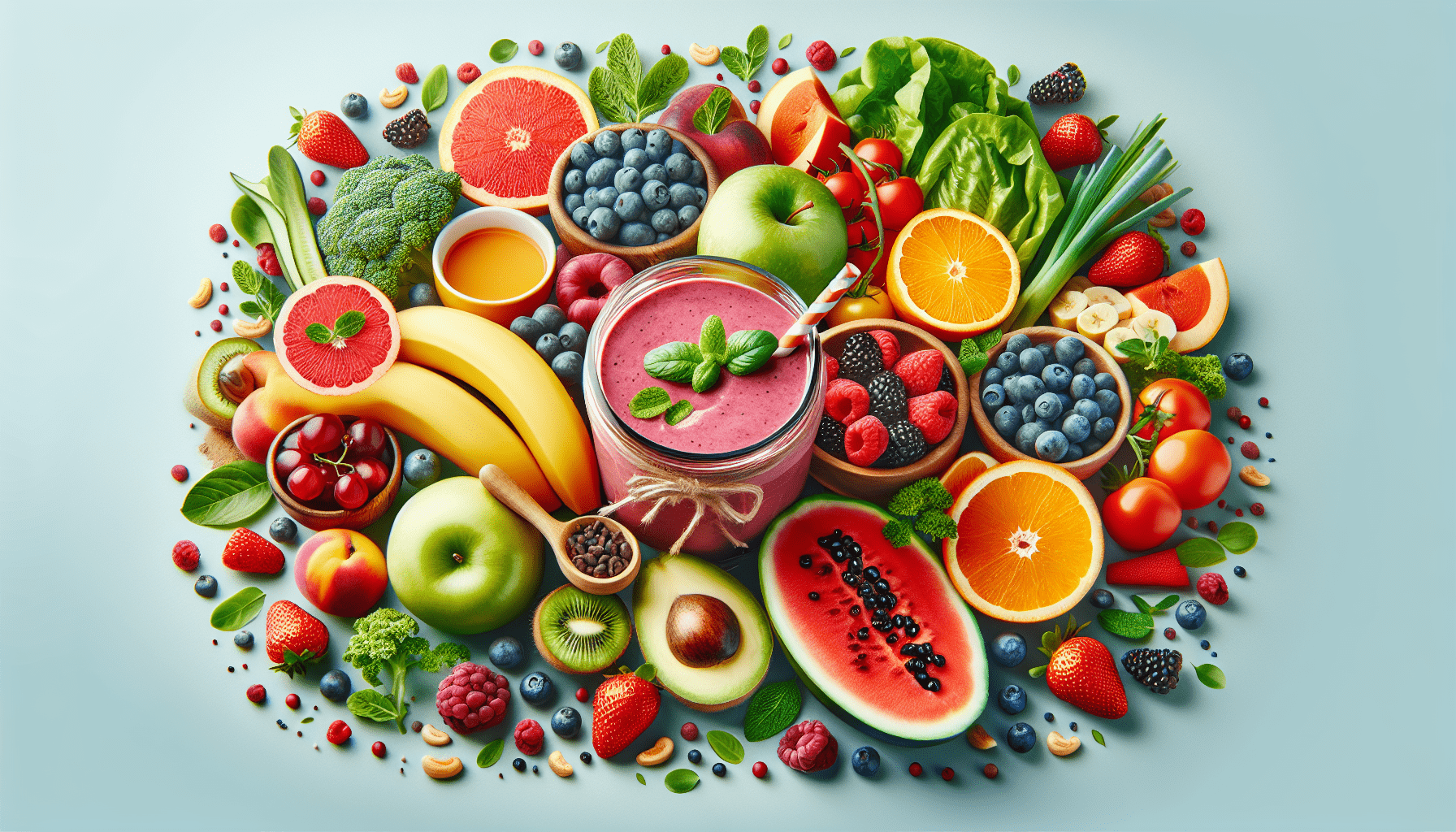
Are you ready to start your journey to a healthier lifestyle? In this Beginner’s Guide to Creating a Nutritionally Balanced Smoothie, you will discover the secrets to making delicious and nutritious smoothies right from the comfort of your own kitchen. Whether you’re a seasoned smoothie lover looking to elevate your creations or a beginner wanting to incorporate more fruits and vegetables into your diet, this article will provide you with all the tips and tricks you need to create smoothies that are not only tasty but also packed with essential nutrients. Get ready to blend your way to a healthier you!
Choose a Liquid Base
Selecting the right liquid for your smoothie
When it comes to creating a delicious and nutritious smoothie, selecting the right liquid base is key. Some popular options for a smoothie base include water, coconut water, nut milk, or dairy milk. Each option offers its own unique benefits.
Water is a simple and calorie-free option that can help to hydrate the body. It is a great choice for those looking to keep their smoothie light and refreshing. Coconut water, on the other hand, is not only hydrating but also provides natural electrolytes, making it an excellent choice for post-workout smoothies.
Nut milk, such as almond or cashew milk, adds creaminess to the smoothie without the dairy. These options are perfect for those who are lactose intolerant or following a plant-based diet. If you prefer a dairy milk base, options like skim milk, soy milk, or Greek yogurt can provide additional protein and calcium.
Healthy options for liquid base
When choosing a liquid base for your smoothie, it’s essential to opt for healthy options that align with your dietary goals. If you’re looking to reduce calories and sugar content, consider using water or unsweetened almond milk as your base.
For those interested in boosting protein intake, Greek yogurt or milk made from soy, hemp, or pea protein can be excellent choices. These options not only add creaminess to the smoothie but also help to keep you feeling satisfied and full.
Coconut water is a hydrating and refreshing choice that adds natural sweetness to the smoothie. Additionally, it provides essential electrolytes, making it a perfect choice for those with an active lifestyle or during the hot summer months.
Ultimately, the choice of liquid base is up to personal preference and dietary needs. Experiment with different options to find the one that best suits your taste and health goals.
Add Fruits and Vegetables
Selecting a variety of fruits and vegetables
The addition of fruits and vegetables is what truly sets a smoothie apart from other beverages. They not only add flavor and vibrant colors but also provide a plethora of vitamins, minerals, and antioxidants that contribute to overall health and well-being.
When choosing fruits for your smoothie, try to select a variety of different colors. This ensures that you’re getting a wide array of nutrients. For example, blueberries provide antioxidants, bananas offer potassium, and oranges are loaded with vitamin C.
Vegetables are equally important in a nutritious smoothie. Leafy greens like spinach and kale are excellent choices as they are rich in fiber and various vitamins and minerals. Other vegetables such as carrots, beets, or cucumbers can add a unique taste and texture to your smoothie.
Choosing ripe and fresh produce
To get the most flavor and nutritional benefits from your smoothie, it’s important to choose ripe and fresh produce. Ripe fruits are generally sweeter and more flavorful, enhancing the taste of your smoothie. Look for fruits with vibrant colors, a pleasant aroma, and a slightly soft texture.
When it comes to vegetables, opt for crisp and brightly colored ones. Avoid any signs of wilting or discoloration, as this may indicate a loss of nutrients. If possible, consider buying organic produce to reduce exposure to potentially harmful pesticides.
Benefits of adding fruits and vegetables to your smoothie
Adding fruits and vegetables to your smoothie offers numerous benefits. These nutrient-packed ingredients provide essential vitamins, minerals, and antioxidants that promote optimal health.
Fruits are rich in vitamins A and C, which support a healthy immune system, promote skin health, and protect against cellular damage. They also provide natural sugars, giving your smoothie a touch of sweetness without the need for added sugars.
Vegetables contain a range of vitamins, minerals, and fiber that are essential for overall well-being. Leafy greens like spinach and kale are particularly nutrient-dense, offering vitamins K, C, and E, as well as folate and iron.
By incorporating a variety of fruits and vegetables into your smoothie, you’ll not only enhance its taste but also increase its nutritional value, making it a convenient and delicious way to nourish your body.
Incorporate Protein
Importance of protein in a balanced smoothie
Protein is an essential macronutrient that plays a crucial role in numerous bodily functions. It is important to include an adequate amount of protein in your smoothie to ensure that you feel satisfied and to support muscle repair and growth. Protein also helps to stabilize blood sugar levels and promote satiety, helping you to stay full for longer.
Including protein in your smoothie is particularly beneficial for those following a vegetarian or vegan diet or for individuals who may not consume enough protein through their regular meals.