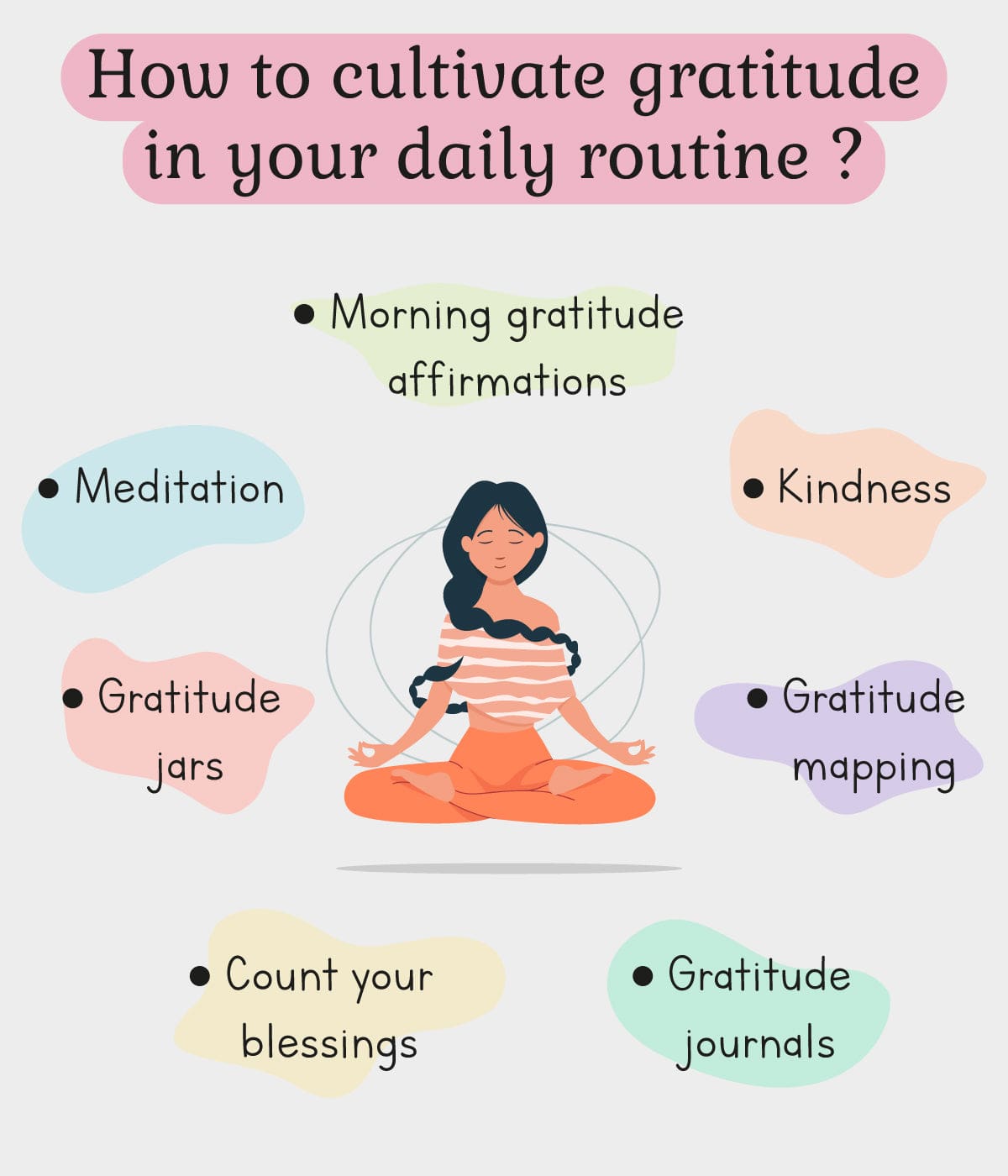
Imagine a world where every day you wake up feeling grateful and appreciative for the simple joys that surround you. A world where positivity and happiness are not fleeting moments, but a consistent state of mind. In this article, we will explore the power of cultivating gratitude and appreciation, and share practical practices that can help you develop a positive mindset. By consciously focusing on the blessings in your life and embracing a mindset of appreciation, you can unlock a limitless source of joy and fulfillment. Get ready to embark on a journey of self-discovery and transformation as we delve into the practices for cultivating gratitude and appreciation.

Keeping a Gratitude Journal
Benefits of a gratitude journal
Keeping a gratitude journal can have numerous benefits for your overall well-being and positive mindset. By regularly noting down the things you are grateful for, you can shift your focus towards the positive aspects of your life. This practice can help cultivate a sense of gratitude, leading to increased happiness, improved relationships, and enhanced mental and emotional well-being.
Research has shown that maintaining a gratitude journal can boost your mood and lower stress levels. When you consciously take the time to acknowledge and appreciate the good things in your life, you train your brain to look for the positive, which can lead to a more optimistic outlook. Additionally, practicing gratitude can improve your self-esteem, as you become more aware of your own accomplishments and the support you receive from others.
Tips for keeping a gratitude journal
To effectively keep a gratitude journal, here are some tips to get you started:
-
Set a regular time: Establish a consistent time each day to write in your gratitude journal. It could be in the morning to start your day off with positivity, or in the evening to reflect on the good moments of the day.
-
Be specific: Instead of simply stating that you are grateful for your family, friends, or health, try to be specific and include details about why you are grateful. For example, “I am grateful for my family’s unwavering support and love, especially during challenging times.”
-
Vary your entries: Don’t limit yourself to big events or accomplishments. Find joy in the little things and appreciate the everyday moments that bring you happiness. It could be something as simple as a good cup of coffee or a beautiful sunrise.
-
Reflect on challenges: Gratitude doesn’t always have to be about the positive aspects of your life. You can also find gratitude in difficult situations by acknowledging what you have learned, the strength you have gained, or the support you have received.
-
Make it a ritual: Consider incorporating your gratitude journaling into a daily ritual. Light a candle, play soft music, or create a relaxing environment that encourages introspection and gratitude.
Examples of gratitude journal prompts
If you are uncertain about what to write in your gratitude journal, here are some prompts to help get you started:
- Today, I am grateful for…
- One person who has positively impacted my life is…
- A recent accomplishment I am proud of is…
- Something that made me smile today was…
- I am grateful for the lesson I learned from…
Remember, your gratitude journal is a personal reflection of the things that bring you joy, fulfillment, and appreciation.
Expressing Gratitude to Others
Importance of expressing gratitude
Expressing gratitude to others is not only a kind gesture, but it also has significant benefits for both the giver and the recipient. When you express gratitude, you not only strengthen your relationships but also promote a positive and encouraging environment. It shows that you value and appreciate the support, kindness, and contributions of those around you.
Gratitude can have a profound impact on your mental and emotional well-being. It helps foster a sense of connection and belonging, which can enhance your overall happiness and life satisfaction. When you express gratitude to others, you cultivate a positive mindset and reinforce positive social interactions, leading to improved relationships and increased social support.
Ways to express gratitude
Expressing gratitude can be done in simple yet meaningful ways. Here are some ideas to consider:
-
Say thank you: A simple “thank you” can go a long way in expressing your gratitude. Whether it’s thanking someone in person, writing a thoughtful note, or sending a heartfelt message, taking the time to express your appreciation directly is a powerful gesture.
-
Acts of kindness: Show your gratitude through acts of kindness. Perform random acts of kindness for others, whether it’s helping with chores, surprising them with a small gift, or offering support when needed. These acts demonstrate your gratitude and generosity.
-
Verbal appreciation: Take the time to acknowledge someone directly and express your gratitude verbally. Tell them how their actions or presence have positively impacted your life and how grateful you are for their support.
-
Write a gratitude letter: Consider writing a letter of gratitude to someone who has made a significant difference in your life. Share specific examples of how they have influenced your journey and express your deep appreciation for their presence.
Ideas for expressing gratitude to others
If you’re looking for specific ways to express gratitude to others, here are some ideas:
- Organize a surprise appreciation celebration for someone you care about.
- Cook a special meal for a loved one as a gesture of gratitude for their constant support.
- Give thoughtful and personalized gifts that show you have paid attention to the recipient’s interests and preferences.
- Volunteer your time or skills to a cause or organization that someone you appreciate supports.
- Send a handwritten note or card to someone, expressing your gratitude and detailing the impact they have had on your life.
Remember, expressing gratitude is not limited to grand gestures. Even small acts of gratitude can have a profound impact on your relationships and overall well-being.
Practicing Mindfulness
Understanding mindfulness
Mindfulness is a practice that involves bringing your attention to the present moment and fully engaging with your thoughts, feelings, and experiences without judgment. It is about being fully aware and accepting of the present moment, rather than dwelling on the past or worrying about the future.
Mindfulness allows you to cultivate a state of non-reactiveness and awareness, enabling you to experience life more fully. By practicing mindfulness, you enhance your ability to appreciate and savor the simple joys and pleasures that often go unnoticed in the rush of daily life.
Benefits of mindfulness
Practicing mindfulness can have numerous benefits, including cultivating gratitude and appreciation. Here are some of the advantages:
-
Increased awareness: Mindfulness helps you become more attuned to the present moment, allowing you to fully experience and appreciate the small details and joys of life that you may have otherwise overlooked.
-
Reduced stress and anxiety: Mindfulness has been shown to reduce stress and anxiety levels by promoting a sense of calmness and relaxation. It allows you to let go of worries about the past or future and focus on the present moment.
-
Improved mental well-being: Regular mindfulness practice has been linked to improved mental well-being, including increased happiness, self-compassion, and overall life satisfaction.
Mindfulness exercises for cultivating gratitude
Here are some mindfulness exercises specifically designed to cultivate gratitude and appreciation:
-
Mindful breathing: Take a few minutes each day to focus on your breath. As you inhale, think of something you are grateful for, and as you exhale, release any tension or negativity. This exercise helps anchor your gratitude in your body and breath.
-
Sensory awareness: Engage your senses and focus on the details of your surroundings. Notice the colors, textures, smells, and sounds around you. This exercise helps you appreciate the beauty and richness of your environment.
-
Gratitude walk: Take a walk in nature and consciously observe the beauty of your surroundings. Pay attention to the smallest details, such as the rustling of leaves or the chirping of birds. Express gratitude for the natural world and its wonders.
-
Loving-kindness meditation: Practice a loving-kindness meditation where you send positive and compassionate thoughts to yourself and others. Cultivate feelings of gratitude and appreciation for the individuals in your life.
Remember, mindfulness is a skill that requires practice. By incorporating these exercises into your daily routine, you can cultivate a greater sense of gratitude and appreciation for the present moment.
Engaging in Acts of Kindness
The connection between kindness and gratitude
Kindness and gratitude are closely intertwined. Engaging in acts of kindness towards others not only benefits them but also fosters a sense of gratitude within ourselves. When we extend kindness to others, we become more aware of the positive impact we have on their lives, which in turn generates gratitude for the ability to make a difference.
Acts of kindness can range from simple gestures, such as holding the door for someone, to more significant acts, such as volunteering or donating to a charitable cause. Regardless of the scale, each act of kindness provides an opportunity to foster appreciation and gratitude for the interconnectedness and inherent goodness of humanity.
Ideas for acts of kindness
If you’re looking for ideas for acts of kindness, here are some suggestions to get you started:
-
Volunteer your time: Find local organizations or causes that align with your interests and donate your time and skills. This could involve helping at a food bank, visiting a nursing home, or tutoring children in need.
-
Perform random acts of kindness: Surprise someone with a small act of kindness, such as paying for their coffee, leaving positive notes for strangers to find, or helping a neighbor with tasks they may struggle with.
-
Practice active listening: Give your full attention when someone is speaking to you. Truly listen without interrupting or thinking about your response. This act of kindness demonstrates that you value and respect the other person’s thoughts and feelings.
-
Practice forgiveness: Extend forgiveness to someone who may have wronged you. Let go of resentment and offer understanding and compassion instead. This act of kindness allows you to release negative emotions and cultivate gratitude for personal growth.
How acts of kindness foster gratitude
Engaging in acts of kindness has a profound impact on our gratitude levels. Here’s how acts of kindness foster gratitude:
-
Shifts focus: When you perform acts of kindness, you shift your focus from your own concerns to the needs and well-being of others. This shift allows you to recognize and appreciate the positive impact you can have on someone’s life.
-
Heightens empathy: Acts of kindness foster empathy and understanding for others’ experiences. This heightened empathy promotes gratitude as you become more aware of the challenges others may face and the positive difference you can make.
-
Creates a ripple effect: Acts of kindness have the potential to create a ripple effect of positivity. When you extend kindness to others, it often inspires them to do the same, creating a cycle of gratitude, appreciation, and compassion.
Remember, acts of kindness can be simple and don’t require grand gestures. It’s the intention and genuine care behind the action that truly matters.

Finding Joy in the Little Things
The power of noticing small pleasures
Finding joy in the little things is an essential practice for cultivating gratitude and appreciation in your daily life. Often, we overlook the small pleasures and simple moments of happiness that can bring immense joy and gratitude.
When you consciously pay attention to and appreciate these little things, you create space for gratitude to flourish. It allows you to shift your focus from what may be lacking to what is present, fostering a positive mindset and an appreciation for the richness of life.
Tips for finding joy in everyday moments
Here are some tips to help you find joy in the little things:
-
Practice mindfulness: Engage your senses fully in each moment. Notice the sights, sounds, scents, tastes, and textures that surround you. By being fully present, you open yourself up to the joy of experiencing each moment as it is.
-
Keep a gratitude jar: Create a gratitude jar or box where you can write down and collect moments, experiences, or things you are grateful for. Take the time to reflect on and appreciate these little moments of joy whenever you feel the need.
-
Slow down: In our fast-paced lives, it’s easy to rush through each day without truly savoring the moments. Slow down and consciously engage in activities that bring you joy, whether it’s enjoying a cup of tea, reading a good book, or taking a leisurely walk in nature.
-
Practice curiosity: Cultivate a sense of curiosity and wonder in your everyday life. Approach each moment with a fresh perspective and embrace the opportunity to discover new things and find joy in the familiar.
Examples of small things to appreciate
Finding joy in the little things can take many forms. Here are some examples of small things to appreciate:
- The warmth of a sunny day on your skin.
- The sound of raindrops hitting the window.
- A heartfelt conversation with a loved one.
- The laughter of a child.
- A delicious meal shared with friends or family.
- The beauty of a blooming flower.
- The feeling of a cozy blanket on a cold day.
- The aroma of freshly brewed coffee.
- The feeling of accomplishment after completing a task.
- The quiet stillness of a peaceful morning.
Remember, it’s the act of noticing and appreciating these small moments of joy that can profoundly impact your gratitude and overall well-being.
Reflecting on Moments of Appreciation
The significance of reflecting on moments of appreciation
Reflecting on moments of appreciation allows you to deepen your gratitude and reinforce positive experiences in your memory. By intentionally savoring and reflecting on positive moments, you enhance your ability to derive joy and gratitude from them, even after they have passed.
Reflecting on moments of appreciation also helps train your brain to notice and acknowledge the positive aspects of your life. It allows you to break free from the negative bias that often dominates our thoughts and focus on what is going well.
Methods for reflecting on and savoring positive experiences
Here are some methods to help you reflect on and savor positive experiences:
-
Journaling: Set aside time each day or week to reflect on positive experiences and moments of appreciation. Write them down in a journal, describing the details and emotions associated with each moment. This practice helps embed the positive experiences in your memory and enhances your gratitude.
-
Gratitude meditation: Incorporate gratitude into your meditation practice. Take a few moments to reflect on the things you are grateful for and the positive experiences that have shaped your day. Visualize these moments and fully immerse yourself in the feelings of gratitude and appreciation.
-
Visualization exercises: Take a few minutes each day to mentally revisit a positive experience or moment of appreciation. Close your eyes and vividly imagine the sights, sounds, and emotions associated with that moment. This exercise helps anchor positive experiences in your memory and strengthens your gratitude.
-
Share with others: Share moments of appreciation with loved ones or supportive friends. Expressing and discussing positive experiences not only allows you to relive them but also strengthens your sense of gratitude through shared joy and celebration.
Effects of reflection on gratitude and appreciation
Regularly reflecting on moments of appreciation has a profound impact on your gratitude and overall well-being. Here are some effects of reflection:
-
Enhanced gratitude: Reflecting on positive experiences deepens your sense of gratitude. It allows you to truly appreciate and acknowledge the positive aspects of your life, leading to increased feelings of gratefulness.
-
Positive mindset: Intentionally focusing on positive experiences helps train your brain to notice and seek out more positive moments. This shift in mindset promotes an overall positive outlook and increases your ability to find joy and gratitude in everyday life.
-
Increased resilience: Reflecting on moments of appreciation can provide a source of strength and resilience during challenging times. It reminds you of the positive experiences you have had and reinforces your ability to find joy and gratitude even in difficult situations.
Remember, reflection is a personal practice, and you can tailor the methods to suit your preferences and needs. The key is to regularly engage in reflection to reap the benefits of gratitude and appreciation.
Practicing Self-Compassion
Understanding self-compassion
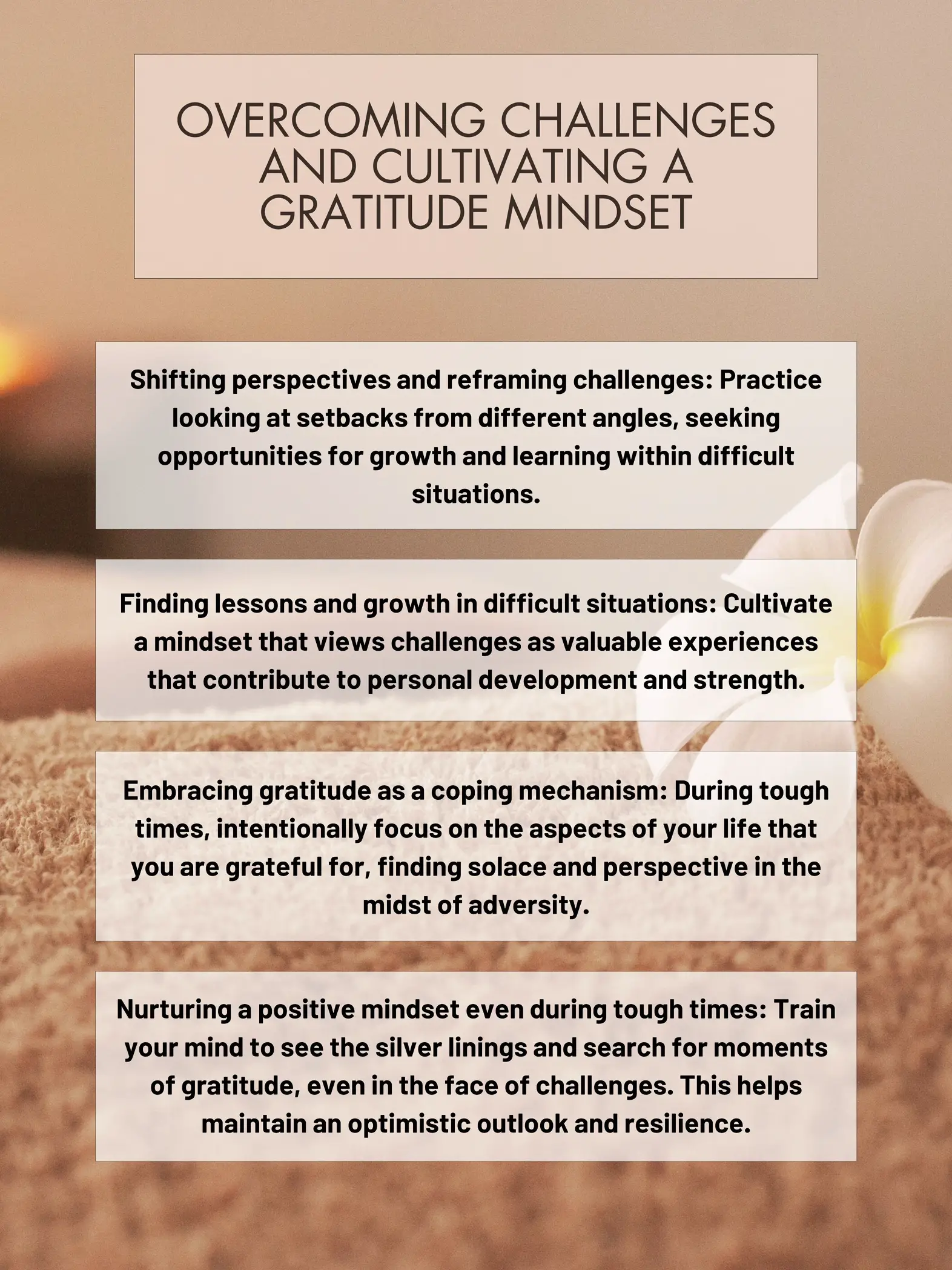
Self-compassion is the practice of treating yourself with kindness, understanding, and acceptance, especially in times of difficulties or self-criticism. It involves extending the same compassion and empathy you would offer to a friend or loved one to yourself.
Self-compassion recognizes that everyone makes mistakes, faces challenges, and experiences pain. By approaching yourself with compassion, you cultivate a sense of self-worth, self-acceptance, and a greater capacity for gratitude and appreciation.
Benefits of self-compassion
Practicing self-compassion has numerous benefits for your overall well-being and gratitude. Here are some advantages:
-
Increased self-acceptance: Self-compassion allows you to embrace your imperfections and treat yourself with kindness and understanding. It promotes a sense of self-acceptance, which is key to cultivating gratitude and appreciation for who you are.
-
Reduced self-criticism: Self-compassion helps counteract self-criticism and negative self-talk. It allows you to recognize your flaws and mistakes without judgment, fostering a positive mindset and opening up space for gratitude and self-appreciation.
-
Improved resilience: By approaching yourself with compassion during challenging times, you build resilience and strengthen your ability to navigate obstacles. This resilience enables you to find gratitude even in the face of adversity.
Techniques for cultivating self-compassion
Here are some techniques to help you cultivate self-compassion:
-
Practice self-kindness: Treat yourself with kindness, especially when facing difficulties or setbacks. Offer yourself words of encouragement and support, just as you would to a friend in need.
-
Challenge self-criticism: When negative self-talk arises, consciously challenge and reframe those thoughts. Replace self-criticism with self-compassionate thoughts and reminders of your worth and value.
-
Practice self-care: Engage in activities that nurture your physical, mental, and emotional well-being. Prioritize self-care rituals, such as taking time for relaxation, practicing mindfulness, or engaging in hobbies that bring you joy.
-
Cultivate mindfulness: Incorporate mindfulness into your self-compassion practice. Notice and acknowledge your emotions, thoughts, and physical sensations without judgment. Allow yourself to fully experience and accept whatever arises.
Remember, self-compassion is an ongoing practice that requires patience and self-awareness. As you cultivate self-compassion, you foster a greater capacity for gratitude and appreciation, both for yourself and others.
Surrounding Yourself with Grateful People
The influence of social connections on gratitude
The people we surround ourselves with have a significant impact on our mindset, including our gratitude and appreciation levels. When we surround ourselves with grateful individuals, their positive outlook and appreciation for life can rub off on us, helping us cultivate our own sense of gratitude.
Grateful people tend to notice and appreciate the good in their lives and the contributions of others. Their mindset influences our own, as we become more attuned to the positive aspects of our own experiences and the support we receive from others.
Finding and nurturing relationships with grateful individuals
To surround yourself with grateful individuals, consider the following tips:
-
Seek out like-minded individuals: Engage in activities or join groups that attract people who prioritize gratitude and appreciation. Attend workshops or events centered around personal growth, mindfulness, or gratitude to connect with individuals who share similar values.
-
Practice active listening: Actively listen to others and engage in meaningful conversations. When you show genuine interest in others’ experiences and thoughts, you create opportunities for gratitude and appreciation to be shared and explored.
-
Express gratitude and appreciation: Practice expressing gratitude to those around you. When you openly acknowledge and appreciate the positive qualities and contributions of others, you encourage a gratitude-focused environment and attract individuals who value gratitude.
-
Cultivate gratitude rituals together: Create opportunities to engage in gratitude rituals or practices with others. This could involve sharing gratitude journal entries, organizing gratitude circles or gatherings, or participating in gratitude-based activities as a group.
Remember, surrounding yourself with grateful people not only enhances your own gratitude and appreciation but also creates a supportive and encouraging community centered on positivity and well-being.
Using Affirmations and Positive Self-Talk
The power of affirmations and positive self-talk
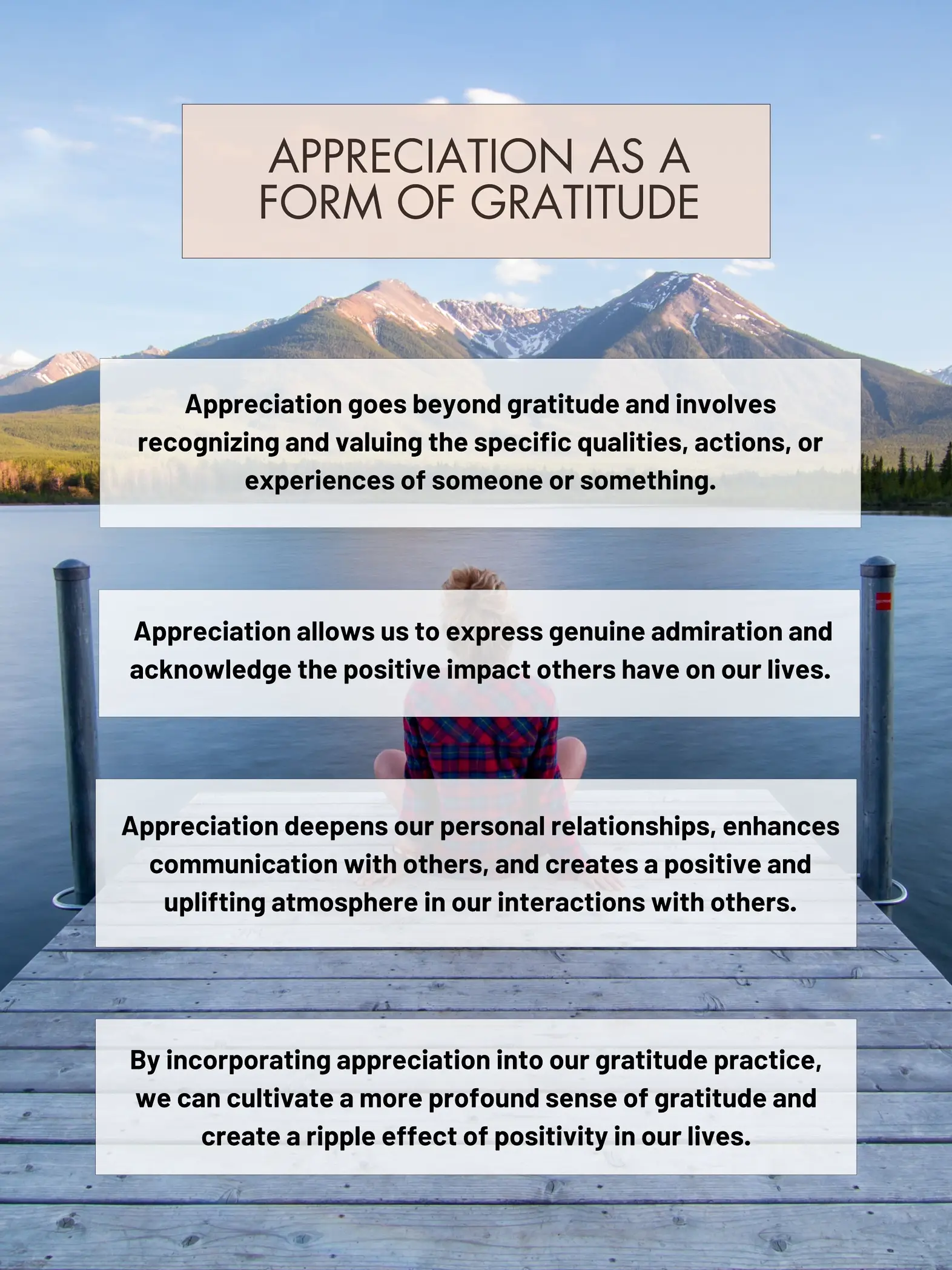
Affirmations and positive self-talk are powerful tools for cultivating gratitude and appreciation. They shape the way we perceive ourselves, our experiences, and the world around us. By intentionally choosing positive words and thoughts, we can positively influence our mindset and promote a greater sense of gratitude.
Affirmations and positive self-talk help reframe negative beliefs and counteract self-doubt. They create a foundation of self-empowerment and gratitude, enabling us to recognize and appreciate our own worth and the positive aspects of our lives.
Creating and using gratitude affirmations
To create and use gratitude affirmations, consider the following steps:
-
Identify areas of gratitude: Reflect on different areas of your life for which you are grateful. These could include relationships, accomplishments, personal qualities, or moments of joy and fulfillment.
-
Craft positive statements: Based on the areas of gratitude you identified, create positive affirmations that reflect your appreciation and gratitude. For example, “I am grateful for the supportive relationships in my life” or “I appreciate the opportunities for personal growth and learning that come my way.”
-
Repeat affirmations daily: Incorporate your gratitude affirmations into your daily routine. Repeat them to yourself, write them down, or display them in visible locations as reminders of your gratitude and the positive aspects of your life.
-
Embody the affirmations: As you repeat your gratitude affirmations, bring a heartfelt sense of gratitude and appreciation to each statement. Visualize and feel the emotions associated with your affirmations as if they are already true, allowing the gratitude to permeate your being.
Tips for incorporating positive self-talk into daily life
Here are some tips to help you incorporate positive self-talk into your daily life:
-
Be aware of negative self-talk: Pay attention to any negative thoughts or self-critical statements that arise throughout the day. Pause and consciously challenge these thoughts, replacing them with positive, self-affirming statements.
-
Practice self-compassion: Approach yourself with kindness and understanding, especially when facing challenges or setbacks. Use positive self-talk to comfort and encourage yourself, replacing self-criticism with self-compassion.
-
Focus on gratitude: Integrate gratitude into your positive self-talk. Recognize and appreciate the positive aspects of your life, your personal growth, and the support you receive from others.
-
Surround yourself with positive reminders: Surround yourself with inspirational quotes, images, or affirmations that promote positivity, gratitude, and self-acceptance. Place them in visible locations as reminders of your own worth and the abundance of positive experiences in your life.
Remember, positive self-talk requires practice and conscious effort. By incorporating gratitude and appreciation into your self-talk, you strengthen your mindset and promote a greater sense of gratitude and well-being.
Engaging in Gratitude Rituals and Traditions
The role of rituals and traditions in cultivating gratitude
Gratitude rituals and traditions can be powerful tools for cultivating and deepening our sense of gratitude and appreciation. They provide structure and intentionality, allowing us to create meaningful and regular practices that remind us of the positive aspects of our lives.
Rituals and traditions also foster a sense of connection and community, as they often involve sharing gratitude with loved ones or participating in collective expressions of appreciation. They ground us in the present moment and encourage reflection and celebration.
Examples of gratitude rituals and traditions
Consider incorporating the following gratitude rituals and traditions into your life:
-
Gratitude journaling: Set aside time each day or week to write in a gratitude journal. Reflect on the things you are grateful for and express your appreciation in writing. This practice allows you to create a tangible record of your gratitude journey.
-
Gratitude prayers or blessings: Before meals or at specific times of the day, pause to offer a prayer or blessing expressing gratitude for the food, experiences, or relationships in your life. Engage in this tradition individually or with loved ones.
-
Gratitude circles: Gather with friends, family, or a gratitude-focused community to create a gratitude circle. Take turns sharing moments or experiences for which you are grateful, fostering a sense of connection and celebration of gratitude.
-
Celebration of gratitude milestones: Set personal gratitude milestones, such as reaching a specific number of gratitude journal entries or days of consistent gratitude practice. Celebrate these milestones by treating yourself or engaging in a special gratitude-focused activity.
How to create personalized gratitude rituals
To create personalized gratitude rituals, consider the following steps:
-
Reflect on what brings you joy: Identify activities or practices that bring you joy and a sense of connection. These can include activities such as painting, gardening, meditation, or engaging in acts of kindness.
-
Infuse gratitude into existing rituals: Explore ways to infuse gratitude into existing practices or rituals. For example, integrate gratitude into your morning routine by starting each day with a grateful intention or reflection.
-
Experiment and adjust: Experiment with different gratitude rituals and traditions. Pay attention to the ones that resonate with you most and bring the greatest sense of gratitude and satisfaction. Adjust and adapt the rituals to suit your personal preferences and needs.
Remember, gratitude rituals and traditions are flexible and can evolve over time. Make them personal, intentional, and aligned with your values. By incorporating these practices into your life, you deepen your sense of gratitude and appreciation on a regular basis.