
Are you a woman who is looking for natural ways to take care of your hormonal health? Look no further! In this article, we will explore the top yoga poses that can help promote hormonal balance and overall well-being. Whether you’re dealing with PMS symptoms, menopause, or simply want to support your reproductive system, these yoga poses are designed to bring harmony to your body and mind. So, grab your yoga mat and get ready to discover the power of yoga for female hormonal health!
1. Balasana (Child’s Pose)
Description of the pose
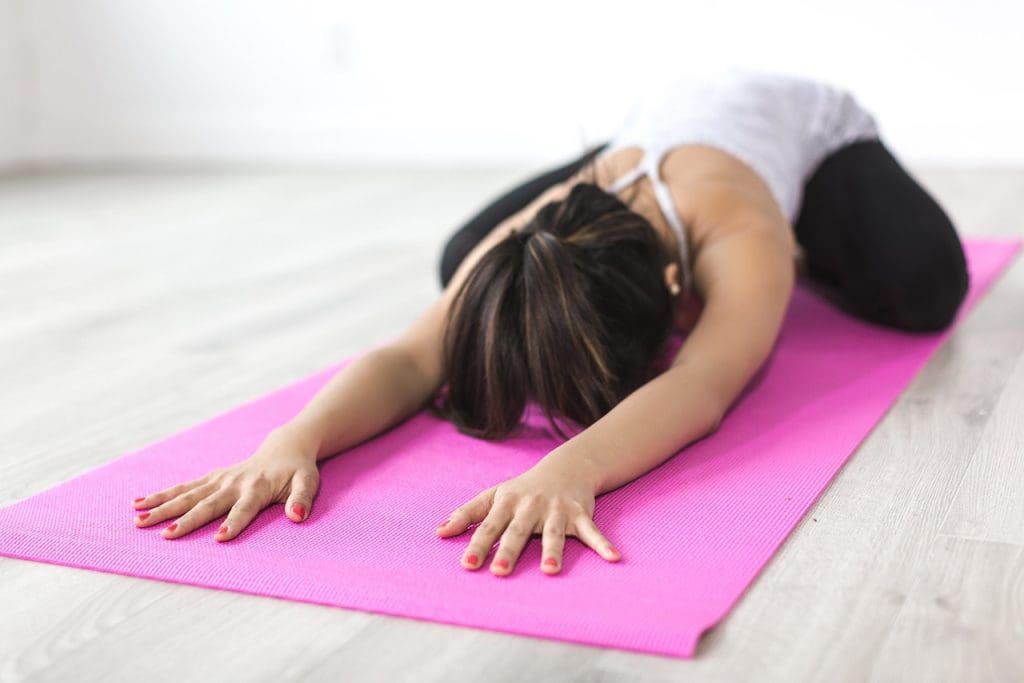
Balasana, also known as Child’s Pose, is a gentle and restorative yoga pose that allows you to surrender and find comfort. In this pose, you kneel down on your mat with your knees wide apart and your big toes touching. Then, you fold forward, allowing your forehead to touch the ground or rest on a prop such as a bolster or block. Your arms can either be extended in front of you or relaxed alongside your body.
Benefits of the pose
Child’s Pose is incredibly beneficial for your hormonal health as it helps to calm and soothe the nervous system. This pose stimulates the parasympathetic nervous system, which promotes relaxation and helps to reduce stress and anxiety. By practicing Balasana regularly, you can alleviate symptoms of PMS, menopause, and other hormonal imbalances. Additionally, this pose gently stretches the hips, thighs, and lower back, relieving tension and discomfort in those areas.
Technique to perform the pose
- Start by kneeling on your mat with your knees wide apart and your toes touching.
- Take a deep breath in, and as you exhale, fold forward from your hips, lengthening your torso and allowing your forehead to rest on the ground or a prop.
- Extend your arms in front of you, or if it feels more comfortable, relax them alongside your body with your palms facing up.
- Take slow and deep breaths, allowing your body to relax and sink into the pose.
- Stay in Balasana for 5 to 10 breaths, or longer if desired.
- To come out of the pose, slowly walk your hands back towards your body, bringing yourself back to an upright position.
2. Bhujangasana (Cobra Pose)
Description of the pose
Bhujangasana, or Cobra Pose, is a gentle backbend that opens up the chest and stretches the spine. In this pose, you lie down on your stomach and place your palms flat on the mat, underneath your shoulders. As you inhale, you lift your chest off the mat, keeping your elbows close to your body, and gaze forward or slightly upward.
Benefits of the pose
Cobra Pose is highly beneficial for your hormonal health as it stimulates the ovaries and helps regulate the menstrual cycle. This posture also stretches the abdomen, improving digestion and relieving menstrual cramps. Additionally, Bhujangasana strengthens the back muscles, reduces fatigue, and stimulates the adrenal glands, which are responsible for hormone production.
Technique to perform the pose
- Start by lying flat on your stomach, with your feet together and toes pointed.
- Place your palms flat on the mat, underneath your shoulders, with your elbows close to your body.
- Press the tops of your feet into the mat and engage your leg muscles.
- Take a deep breath in, and as you exhale, press your hands into the mat and begin to lift your chest off the floor, using the strength of your back muscles.
- Keep your elbows close to your body and gaze forward or slightly upward, lengthening your neck.
- Hold Cobra Pose for 5 to 10 breaths, focusing on deepening the stretch with each inhalation and relaxation with each exhalation.
- To come out of the pose, exhale and slowly lower your chest back down to the mat.
3. Ustrasana (Camel Pose)
Description of the pose
Ustrasana, commonly known as Camel Pose, is a deep backbend that opens up the front of the body. In this pose, you kneel on your mat with your knees hip-width apart and your toes pointed. As you inhale, you slowly lean back, bringing your hands to your heels or to blocks placed just outside your feet. Your chest and hips open up, and your head gently drops back, creating a beautiful arch in your spine.
Benefits of the pose
Camel Pose is incredibly beneficial for female hormonal health as it stimulates the endocrine glands, including the thyroid and pituitary glands, which play a vital role in hormonal balance. This pose helps regulate the menstrual cycle, reduces symptoms of menopause, and improves overall hormone production. Ustrasana also stretches the front of the body, including the chest, abdomen, and hips, alleviating tension and tightness.
Technique to perform the pose
- Start by kneeling on your mat with your knees hip-width apart.
- Place your hands on your lower back, fingers pointing downward.
- Press your hips forward and lengthen your tailbone toward the floor.
- As you inhale, slowly lean back, gently arching your spine.
- If it feels comfortable, bring your hands to your heels or rest them on blocks just outside your feet.
- Drop your head back, creating a gentle stretch in your neck.
- Hold Ustrasana for 5 to 10 breaths, focusing on breathing deeply and maintaining a sense of openness in your chest and hips.
- To come out of the pose, bring your hands back to your lower back, engage your core muscles, and slowly lift your torso back up to an upright position.
4. Dhanurasana (Bow Pose)
Description of the pose
Dhanurasana, also known as Bow Pose, is a powerful backbend that resembles the archery bow. In this pose, you lie on your stomach, bend your knees, and reach back to hold onto your ankles or feet. As you inhale, you kick your feet into your hands, lifting your chest and thighs off the ground, creating a beautiful bow shape with your body.
Benefits of the pose
Bow Pose is highly beneficial for female hormonal health as it helps stimulate the reproductive organs and regulate the menstrual cycle. This posture also strengthens the back muscles and improves spinal flexibility. Dhanurasana can also relieve menstrual discomfort and back pain, while simultaneously energizing the body and reducing stress.
Technique to perform the pose
- Start by lying flat on your stomach, with your legs hip-width apart and your arms alongside your body.
- Bend your knees and reach back with your hands to hold onto your ankles or feet.
- Take a deep breath in, and as you exhale, kick your feet into your hands, lifting your chest and thighs off the ground.
- Look forward or slightly upward, keeping your neck in a comfortable position.
- Hold Bow Pose for 5 to 10 breaths, focusing on deepening the stretch with each inhalation and relaxing with each exhalation.
- To come out of the pose, gently release your ankles or feet and slowly lower your chest and thighs back down to the mat.
5. Supta Baddha Konasana (Reclining Bound Angle Pose)
Description of the pose
Supta Baddha Konasana, also known as Reclining Bound Angle Pose or Butterfly Pose, is a relaxing and restorative pose that gently opens up the hips and groins. In this pose, you lie on your back and bring the soles of your feet together, allowing your knees to fall open to the sides. You can place cushions or blocks under your knees for support.
Benefits of the pose
Reclining Bound Angle Pose is highly beneficial for female hormonal health as it stimulates the ovaries and helps regulate the menstrual cycle. This pose also improves blood circulation to the pelvic region, reducing menstrual cramps and discomfort. Supta Baddha Konasana calms the nervous system, reduces stress and anxiety, and promotes a sense of deep relaxation.
Technique to perform the pose
- Start by lying on your back with your legs extended.
- Bend your knees and bring the soles of your feet together, allowing your knees to fall open to the sides.
- Adjust the distance between your feet and your hips so that you feel a gentle stretch in your inner thighs and groins.
- If desired, you can place cushions or blocks under your knees for support.
- Rest your arms alongside your body, palms facing up, or place one hand on your heart and the other on your abdomen to connect with your breath and your body.
- Close your eyes and take slow, deep breaths, allowing your body to relax and surrender into the pose.
- Stay in Supta Baddha Konasana for 5 to 10 minutes, or longer if desired, soaking in the benefits of deep relaxation and opening.
- To come out of the pose, slowly bring your knees together and roll onto one side, using your arm as a pillow. Take a few moments to rest before slowly sitting up.
6. Viparita Karani (Legs-Up-the-Wall Pose)
Description of the pose
Viparita Karani, also known as Legs-Up-the-Wall Pose, is a gentle inversion that involves lying on your back with your legs extended upward along a wall or other vertical surface. In this pose, your hips can be supported with a bolster or folded blanket to increase comfort.
Benefits of the pose
Legs-Up-the-Wall Pose is a wonderful yoga pose for female hormonal health as it helps regulate the menstrual cycle and reduces symptoms of PMS, menopause, and other hormonal imbalances. This pose improves blood circulation to the pelvic region, reducing congestion and supporting the reproductive organs. Viparita Karani also calms the nervous system, relieves anxiety and insomnia, and aids in relaxation.
Technique to perform the pose
- Start by sitting with one hip against a wall or a sturdy vertical surface.
- Lie back and bring your legs up so that they are resting against the wall, keeping your legs straight.
- Adjust your body so that your buttocks are as close to the wall as possible, supporting your hips with a bolster or folded blanket if needed.
- Place your arms alongside your body, palms facing up, and allow your shoulders to relax.
- Close your eyes and take slow, deep breaths, allowing your body to surrender and release tension.
- Stay in Legs-Up-the-Wall Pose for 5 to 15 minutes, or longer if desired. Feel free to add additional props such as an eye pillow or blanket for extra comfort.
- To come out of the pose, bend your knees and roll onto one side, using your arm as a pillow. Take a few moments to rest before slowly sitting up.
7. Utkata Konasana (Goddess Pose)
Description of the pose
Utkata Konasana, or Goddess Pose, is a powerful yoga pose that strengthens the legs, opens up the hips, and energizes the body. In this pose, you stand with your feet wide apart, toes turned out slightly, and arms extended out to the sides.
Benefits of the pose
Goddess Pose is highly beneficial for female hormonal health as it helps tone the pelvic floor muscles and supports the reproductive organs. This posture improves blood circulation to the pelvis, reducing menstrual discomfort and promoting a healthy menstrual cycle. Utkata Konasana also strengthens the legs and core muscles, boosts energy levels, and instills a sense of empowerment.
Technique to perform the pose
- Start by standing at the top of your mat with your feet slightly wider than hip-width apart.
- Turn your toes out slightly, externally rotating your thighs.
- Bend your knees and lower your hips down, coming into a squat position.
- Extend your arms out to the sides, palms facing down, and engage your core muscles.
- Keep your chest lifted and your spine long, with your gaze forward.
- Hold Goddess Pose for 5 to 10 breaths, focusing on maintaining a steady and strong stance.
- To come out of the pose, press through your feet and slowly straighten your legs, returning to a standing position.
8. Setu Bandhasana (Bridge Pose)
Description of the pose
Setu Bandhasana, also known as Bridge Pose, is a gentle backbend that opens up the chest, strengthens the back muscles, and stretches the thighs and hip flexors. In this pose, you lie on your back with your knees bent and your feet hip-width apart. As you inhale, you lift your hips off the mat and interlace your hands underneath your lower back for support.
Benefits of the pose
Bridge Pose is highly beneficial for female hormonal health as it stimulates the thyroid and pituitary glands, which play a crucial role in hormone production. This posture helps to regulate the menstrual cycle, reduce menopausal symptoms, and improve overall hormone balance. Setu Bandhasana also strengthens the legs and back, improves digestion, and relieves stress and fatigue.
Technique to perform the pose
- Start by lying on your back with your knees bent and your feet hip-width apart.
- Place your arms alongside your body, palms facing down.
- Inhale and press through your feet, lifting your hips off the mat.
- Interlace your hands underneath your lower back, and draw your shoulder blades closer together to support your lift.
- Keep your thighs parallel to each other and your chest lifted, gazing toward your chin.
- Hold Bridge Pose for 5 to 10 breaths, focusing on deepening the stretch with each inhalation and relaxing with each exhalation.
- To come out of the pose, slowly release your hands and lower your spine back down to the mat, one vertebra at a time.
9. Janu Sirsasana (Head-to-Knee Pose)
Description of the pose
Janu Sirsasana, also known as Head-to-Knee Pose, is a seated forward bend that stretches the hamstrings, hips, and lower back. In this pose, you sit on the mat with one leg extended straight in front of you and the sole of the other foot placed against your inner thigh. As you exhale, you fold forward, reaching for your extended leg with your hands.
Benefits of the pose
Head-to-Knee Pose is highly beneficial for female hormonal health as it helps balance the endocrine system and regulate hormone production. This posture also stimulates the reproductive organs and supports healthy menstrual function. Janu Sirsasana stretches the hamstrings and calves, improves digestion, and calms the mind, reducing stress and anxiety.
Technique to perform the pose
- Start by sitting on your mat with your legs extended straight in front of you.
- Bend your left knee and place the sole of your left foot against your inner right thigh.
- Inhale and lengthen your spine, sitting up tall.
- Exhale and hinge forward from your hips, folding over your extended right leg.
- Reach for your foot, ankle, or shin with your hands, using a strap or towel if needed to reach comfortably.
- Keep your chest lifted and your gaze forward or slightly downward.
- Hold Head-to-Knee Pose for 5 to 10 breaths, focusing on deepening the stretch with each exhalation.
- To come out of the pose, slowly inhale and lift your torso back up to an upright position. Extend both legs forward and shake them out before switching sides.
10. Sarvangasana (Shoulder Stand)
Description of the pose
Sarvangasana, also known as Shoulder Stand, is an inverted yoga pose that involves balancing on the shoulders with the legs extended vertically upward. In this pose, you lie on your back and raise your legs, hips, and trunk off the ground, supporting your back with your hands.
Benefits of the pose
Shoulder Stand is highly beneficial for female hormonal health as it improves circulation to the thyroid and pituitary glands, which regulate hormonal balance. This posture stimulates the thyroid gland, aiding in the proper functioning of the endocrine system. Sarvangasana also strengthens the shoulders, neck, and core muscles, relieves stress and anxiety, and boosts energy and vitality.
Technique to perform the pose
- Start by lying on your back with your legs extended and your arms alongside your body, palms facing down.
- Bend your knees and use your core strength to lift your feet and hips off the mat, coming into Plow Pose.
- Walk your hands down your back and place them on your lower back for support, with your elbows close to each other.
- Extend your legs straight up toward the ceiling, engaging your core and legs.
- If it feels comfortable, you can gently lower your hands to your hips for additional support.
- Keep your neck long and relaxed, and gaze toward your toes or the point between your eyebrows.
- Hold Shoulder Stand for 5 to 10 breaths, or longer if desired. Focus on breathing deeply and steadying your breath.
- To come out of the pose, slowly lower your legs back down to the mat, one vertebra at a time, using your core strength to control the descent.
Incorporate these top yoga poses for female hormonal health into your regular practice to experience their multitude of benefits. Remember to listen to your body and honor your limits, modifying the poses as needed to suit your individual needs. With consistent practice, you can support your hormonal balance and overall well-being.