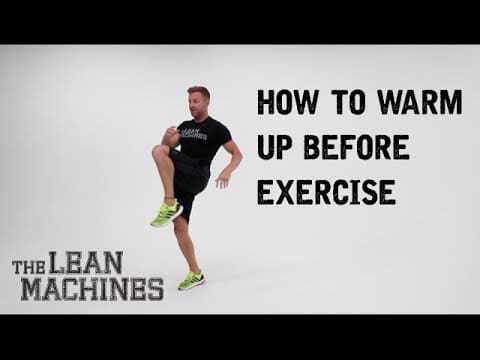
Are you ready to get the most out of your workout? It’s important to warm up properly before diving into any exercise routine. This article will show you the essential steps to take in order to properly prepare your body for the physical demands it’s about to face. By incorporating these warm-up techniques into your routine, you’ll not only enhance your performance but also reduce the risk of injury. So, let’s get started and get your body primed for action!

Why is warming up important?
Warming up before exercise is essential for several reasons. Firstly, it increases the temperature of your body, which helps prepare your muscles and joints for the physical activity ahead. This increase in body temperature also enhances the efficiency of various physiological processes, such as oxygen uptake and enzyme activity, leading to improved performance.
Furthermore, warming up increases blood flow throughout your body. This ensures that your muscles receive an adequate supply of oxygen and nutrients, preparing them for the demands of exercise. Increased blood flow also promotes the removal of waste products from your muscles, reducing the risk of muscle fatigue and discomfort during your workout.
In addition to increasing body temperature and blood flow, warming up also improves flexibility and range of motion. By performing dynamic movements and gentle stretches, you loosen up your muscles and connective tissues, allowing them to move more freely. This increased flexibility not only improves your workout performance but also reduces the likelihood of muscle strains and joint injuries.
Another crucial benefit of a proper warm-up is injury prevention. Engaging in physical activity with cold and stiff muscles significantly increases the risk of strains, sprains, and other musculoskeletal injuries. By gradually preparing your body through a warm-up routine, you reduce the stress placed on your muscles, tendons, and ligaments, making them more resilient and less susceptible to damage.
Lastly, warming up enhances your overall performance. By preparing your body for the exercise ahead, you optimize your physical capabilities and increase your readiness to perform at your best. Whether you’re lifting weights, participating in sports, or engaging in any other physical activity, a well-executed warm-up ensures that your body and mind are fully prepared, enhancing your power, endurance, and coordination.
General warm-up exercises
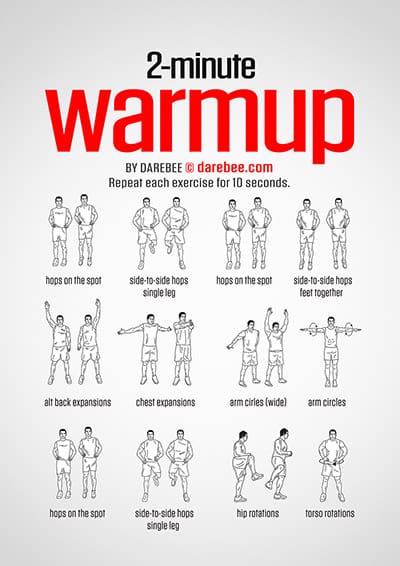
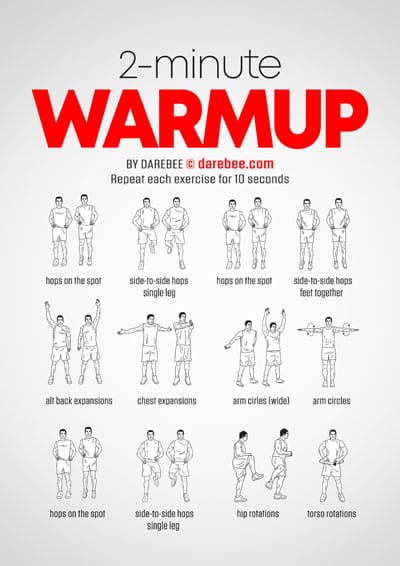
Before diving into more specific movements, a general warm-up is an excellent starting point for any exercise routine. These exercises raise your heart rate and increase blood flow throughout your body, preparing it for the upcoming physical activity. Some examples of effective general warm-up exercises include brisk walking or light jogging, jumping jacks, arm circles, leg swings, and torso twists.
Brisk walking or light jogging is a fantastic way to gradually increase your heart rate and warm up your entire body. It helps engage your larger muscle groups and gets your blood flowing. If jogging is too intense initially, you can start with a brisk walk and gradually transition into a jog as your body warms up.
Jumping jacks are a classic warm-up exercise that targets multiple muscle groups simultaneously. By raising your arms and legs while jumping, you increase your heart rate, improve blood circulation, and engage your shoulders, chest, core, and lower body muscles.
Arm circles are an excellent warm-up exercise to loosen up your upper body. Stand with your feet shoulder-width apart and extend your arms out to the sides. Begin making circular motions with your arms, gradually increasing the size of the circles. This exercise helps warm up your shoulders, upper back, and chest muscles.
Leg swings are particularly beneficial for activities that involve lower body movements, such as running or kicking. Stand beside a wall or hold onto a sturdy object for support. Swing one leg forward and backward, gradually increasing the height and range of motion. Repeat the movement with the other leg. Leg swings effectively warm up your hip flexors, hamstrings, and quadriceps.
Torso twists are a simple warm-up exercise that targets your core muscles and improves spinal mobility. Stand with your feet shoulder-width apart and extend your arms in front of you. Twist your torso from side to side, allowing your arms to follow the movement. This exercise helps warm up your abdominal muscles, obliques, and lower back.
Remember, when performing these general warm-up exercises, focus on executing each movement with proper form and control. Gradually build up the intensity to avoid overexertion and ensure a safe and effective warm-up.
Dynamic stretching
Dynamic stretching involves active movements that take your muscles and joints through their full range of motion. Unlike static stretching, where you hold a position for a prolonged period, dynamic stretching helps loosen up your muscles while simultaneously preparing them for more vigorous activity.
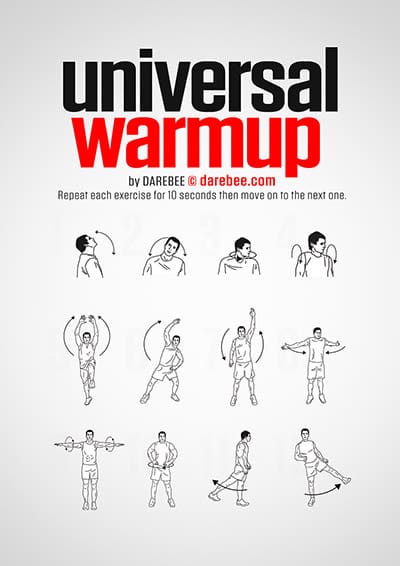
Neck stretches are an essential part of any dynamic stretching routine, as they help release tension in the neck and upper back. Slowly tilt your head from side to side, bringing your ear towards your shoulder without forcing the movement. You can also perform gentle neck rotations, moving your head in a circular motion. These neck stretches promote flexibility and reduce the risk of neck and upper back strain.
Shoulder rolls are beneficial for warming up the muscles surrounding your shoulders and upper back. Stand with your arms relaxed by your sides and slowly roll your shoulders forward in a circular motion. After a few rotations, switch to rolling your shoulders back. This exercise helps increase range of motion in your shoulders and improves blood flow to the surrounding muscles.
Arm swings are dynamic stretches that engage your shoulder joints, chest muscles, and upper back. Stand with your feet shoulder-width apart and extend your arms out to the sides. Swing your arms forward and backward, gradually increasing the range of motion. This exercise not only warms up your arms but also promotes shoulder mobility and flexibility.
Hip circles are an effective warm-up exercise for opening up your hip joints and activating your glute muscles. Stand with your feet hip-width apart and place your hands on your hips. Move your hips in a circular motion, starting with small circles and gradually increasing the size. Be sure to rotate in both clockwise and counterclockwise directions. Hip circles improve hip mobility and can help alleviate stiffness in the lower back and hips.
Leg kicks are dynamic stretches that target your hamstrings, quadriceps, and hip flexors. Stand tall with your feet hip-width apart, and swing one leg forward, alternating between left and right. Gradually increase the height of the kicks and aim for a smooth, controlled movement. Leg kicks improve lower body flexibility and promote blood flow to the muscles involved in walking, running, and jumping.
When performing dynamic stretching exercises, maintain control over your movements and avoid bouncing or jerking motions. Focus on gradually increasing the range of motion and perform each exercise in a smooth and controlled manner.
Specific warm-up exercises
While general and dynamic warm-up exercises prepare your body as a whole, specific warm-up exercises are tailored to the specific movements and muscle groups involved in your chosen activity. These exercises mimic the motions you will be performing during your workout or sport, gradually increasing the intensity and preparing your body for the specific demands ahead.
For example, if you plan to engage in weightlifting, specific warm-up exercises may include bodyweight squats or lighter sets of squats with a barbell. These exercises help activate the muscles in your lower body, specifically your quadriceps, hamstrings, and glutes. They also allow you to practice the correct form and technique before adding additional weight.
Similarly, if you’re preparing for a running event, a specific warm-up may involve a combination of light jogging, high knees, butt kicks, and strides. These exercises target the muscles involved in running, such as your calves, quadriceps, hamstrings, and hip flexors. By gradually increasing the intensity and replicating the movements you’ll be performing during your run, you effectively prepare your body for the activity ahead.
Regardless of your chosen exercise or sport, incorporating specific warm-up exercises is crucial to optimize your performance and reduce the risk of injury. These exercises help recruit and activate the muscles you will be using, ensuring they are ready for the demands of the activity.
Additionally, during the specific warm-up phase, it’s essential to gradually increase the intensity or load of the exercises. This allows your body to adapt to the increased stress gradually, reducing the risk of muscle strains or joint injuries. Start with lighter resistance or lower intensity movements and gradually progress to the full load or intensity you will be working at during your workout or sport.
Cardiovascular warm-up
A cardiovascular warm-up is an integral part of any exercise routine, as it prepares your cardiovascular system for the demands of physical activity. By gradually increasing your heart rate and blood flow, you improve the delivery of oxygen and nutrients to your muscles, enhancing their performance and endurance.
To begin your cardiovascular warm-up, start with light aerobic exercises that increase your heart rate and breathing rate but are still relatively low in intensity. Examples of suitable exercises include jogging in place, brisk walking, cycling on a stationary bike, or using an elliptical machine at a moderate pace. The goal is to engage in activities that elevate your heart rate and warm up your muscles without causing fatigue.
After a few minutes of performing light aerobic exercises, gradually progress to more moderate intensity exercises. This could involve increasing the speed or resistance on the stationary bike, quickening your jogging pace, or incorporating dynamic movements like high knees or jumping jacks. The aim is to further elevate your heart rate and breathing rate while challenging your muscles in a controlled manner.
Sustain the activity for at least 5-10 minutes, allowing your body to adapt to the increased cardiovascular demands. This duration ensures that your heart rate is elevated, your muscles are warmed up and ready for action, and your body is physically prepared for the main part of your exercise routine.
Proper cardiovascular warm-up not only primes your body for exercise but also helps prevent cardiovascular strain or sudden increases in blood pressure. It allows for a gradual transition from resting state to the demands of physical activity, minimizing the risk of cardiovascular complications or discomfort during your workout.
Static stretching
While dynamic stretching is generally recommended during the warm-up phase, static stretching can still be beneficial when done correctly and at the appropriate time. Static stretching involves holding a stretch position for a specific duration, allowing the muscles to lengthen and relax.
Static stretching is ideally performed after the general and dynamic warm-up exercises, when your muscles are warm and more pliable. It helps improve flexibility, loosen tight muscles, and promote relaxation. Here are some examples of static stretches that can be included in your warm-up routine:
-
Calf stretch: Find a wall or sturdy object to support yourself. Step one foot back while keeping it straight, and press your heel into the ground. Lean forward, feeling the stretch in your calf. Hold the stretch for 30 seconds on each leg.
-
Hamstring stretch: Sit on the ground with your legs extended in front of you. Lean forward from your hips, reaching your hands toward your toes. Feel the stretch in the back of your thighs. Hold the stretch for 30 seconds.
-
Quadriceps stretch: Stand tall and bring one foot behind you, grasping your ankle or foot with your hand. Gently pull your foot towards your glutes, feeling the stretch in the front of your thigh. Hold the stretch for 30 seconds on each leg.
-
Chest stretch: Stand with your feet shoulder-width apart and interlace your fingers behind your back. Gently lift your arms away from your body, feeling the stretch in your chest and shoulders. Hold the stretch for 30 seconds.
-
Triceps stretch: Extend one arm overhead and bend it at the elbow, bringing your hand to touch the opposite shoulder blade. Use your other hand to gently push the elbow further, feeling the stretch in the back of your arm. Hold the stretch for 30 seconds on each arm.
Including static stretching in your warm-up routine can help improve your overall flexibility and joint mobility. However, it’s important to note that excessive or prolonged static stretching immediately before exercise can negatively impact performance and increase the risk of injury. Therefore, it is generally recommended to save more extensive static stretching for after your workout or at a separate time on non-exercise days.
Foam rolling
Foam rolling, also known as self-myofascial release, is a self-massage technique that uses a foam roller to alleviate muscle tension, improve mobility, and enhance recovery. Incorporating foam rolling into your warm-up routine can help loosen tight muscles, increase blood flow, and optimize your performance during exercise.
To get started with foam rolling, you will need a foam roller, a cylindrical foam-based tool. Here are some examples of foam rolling exercises that can be beneficial during your warm-up:
-
Rolling the calves: Sit on the ground with your legs extended in front of you. Place the foam roller under your calves and use your arms to lift your hips off the ground. Slowly roll the foam roller up and down your calves, applying gentle pressure to any tight or tender areas. Perform this movement for 1-2 minutes.
-
Rolling the quadriceps: Position yourself on your stomach with the foam roller placed under your thighs. Use your arms and toes to lift your body off the ground, supporting your weight with your forearms and the foam roller. Slowly roll the foam roller up and down your quadriceps, focusing on any areas of tightness or discomfort. Perform this movement for 1-2 minutes.
-
Rolling the glutes: Sit on the foam roller with one foot crossed over the opposite knee. Gently roll back and forth, targeting the muscles on the side of the hip and buttocks. Apply enough pressure to feel a release in the muscles. Perform this movement for 1-2 minutes on each side.
-
Rolling the upper back: Lie on your back with the foam roller positioned horizontally under your upper back. Bend your knees, place your feet flat on the ground, and gently lift your hips off the floor. Use your feet and arms to control the pressure as you roll up and down your upper back, avoiding direct contact with your neck or lower back. Perform this movement for 1-2 minutes.
-
Rolling the IT band: Lie on your side with the foam roller positioned perpendicular to your body, just below your hip joint. Use your top arm for support and your bottom leg to control the pressure as you roll along the outside of your thigh. Be sure to avoid rolling directly over your knee joint. Perform this movement for 1-2 minutes on each side.
Foam rolling can be slightly uncomfortable, especially when targeting areas of tightness or tension. However, it should not be excessively painful. Adjust the pressure and intensity to your comfort level, and remember to breathe deeply and relax as you roll. If you experience sharp pain or discomfort, modify the movement or consult a healthcare professional.
Including foam rolling in your warm-up routine can help increase blood flow, reduce muscle tension, and enhance your overall movement capacity. It is particularly beneficial for individuals with tight muscles or specific areas of muscle tightness or imbalance.
Mental preparation
In addition to physical warm-up exercises, mental preparation plays a vital role in getting ready for exercise. Preparing your mind allows you to focus, set goals, and establish a positive mindset, all of which contribute to a successful workout or sports performance.
To mentally prepare for exercise, try incorporating the following strategies into your warm-up routine:
-
Focus on your workout goals: Remind yourself why you’re exercising and what you hope to achieve. Whether it’s improving your fitness, gaining strength, or relieving stress, having a clear sense of purpose can increase motivation and focus.
-
Visualize successful performance: Take a few moments to mentally rehearse your workout or sports performance. Visualize yourself executing movements with precision, feeling strong and confident. Visualizing successful outcomes helps build confidence and primes your mind for optimal performance.
-
Control breathing and relax: Deep breathing exercises can help promote a state of relaxation and focus. Take slow, deep breaths, filling your lungs with air, and exhaling fully. This mindful breathing technique can help calm the mind, reduce stress, and promote a sense of inner balance.
By incorporating mental preparation techniques into your warm-up routine, you can enhance your focus, motivation, and overall mindset, setting the stage for a productive and enjoyable workout.
Warm-up duration
The duration of your warm-up can vary depending on several factors, including the intensity and duration of your planned exercise, your fitness level, and personal preferences. However, adhering to some general guidelines can help ensure an effective warm-up:
-
General warm-up: Allocate approximately 5-10 minutes for general warm-up exercises. This duration is sufficient to increase body temperature, increase blood flow, and engage your major muscle groups.
-
Dynamic stretching: Plan for approximately 10-15 minutes for dynamic stretching exercises. This timeframe allows you to perform a variety of movements that target different muscle groups, gradually increasing your range of motion and flexibility.
-
Specific warm-up: Dedicate 5-10 minutes to specific warm-up exercises that mimic the movements involved in your chosen activity. This timeframe allows you to practice proper form and gradually increase the intensity or load.
-
Cardiovascular warm-up: Aim to sustain your cardiovascular warm-up for about 5-10 minutes. This duration ensures that your heart rate is elevated and your body is physically prepared for the demands of exercise.
-
Static stretching: Allocate approximately 5-10 minutes for static stretching exercises. Remember, static stretching is best performed after the general and dynamic warm-up exercises to maximize muscle flexibility and relaxation.
-
Optional time for foam rolling: If you choose to incorporate foam rolling into your warm-up routine, allocate an additional few minutes for this activity. 1-2 minutes per muscle group targeted can be sufficient for most individuals.
-
Set aside time for mental preparation: Dedicate a few minutes to mental preparation techniques, such as focusing on your goals, visualizing success, and controlling your breathing. This time allows you to center your mind and establish purpose before exercise.
Ultimately, the duration of your warm-up should be tailored to your individual needs and preferences. Be sure to allow enough time to adequately warm up your body and mind, while also considering the time constraints of your overall exercise routine.
Tips for an effective warm-up
To ensure an effective and safe warm-up, consider the following tips:
-
Start slow and gradually increase intensity: Begin your warm-up with easy movements and gradually challenge your body as it becomes more warmed up and prepared for exercise. Avoid abrupt or explosive movements at the beginning of your warm-up.
-
Focus on form and technique: Use your warm-up as an opportunity to prioritize proper form and technique. Pay attention to your body positioning, range of motion, and alignment. By practicing good form during the warm-up, you set a strong foundation for the main part of your exercise routine.
-
Include a variety of exercises: Incorporate a mix of general warm-up exercises, dynamic stretching movements, specific warm-up exercises, and any other elements that are suitable for your chosen activity. This variety helps target different muscle groups, enhance flexibility, and prepare your body in a well-rounded manner.
-
Listen to your body and adjust accordingly: Everyone’s body is unique, so pay attention to how you feel during your warm-up. If something feels uncomfortable or causes pain, modify the movement or seek guidance from a healthcare professional. Warm-up exercises should feel challenging but not overly painful or unsafe.
-
Stay hydrated: Hydration is essential for optimal exercise performance and thermoregulation. Make sure to drink enough water before, during, and after your warm-up and exercise routine to stay adequately hydrated.
-
Avoid excessive static stretching before exercise: While static stretching can be beneficial after the general and dynamic warm-up, avoid excessive or prolonged static stretching immediately before exercise. This can decrease muscle power and performance, increasing the risk of injury.
By following these tips, you can ensure that your warm-up routine is effective, enjoyable, and sets the stage for a successful exercise session.
In conclusion, warming up properly before exercise is essential for a safe and effective workout or sports performance. By engaging in various warm-up exercises, such as general warm-up exercises, dynamic stretching, specific warm-up exercises, cardiovascular warm-up, static stretching, foam rolling, and mental preparation techniques, you prepare your body and mind for the physical demands ahead. The combination of increased body temperature, blood flow, flexibility, injury prevention, and enhanced performance makes the warm-up an integral part of any exercise routine. Remember to tailor the duration and intensity of your warm-up to your individual needs and always listen to your body. With a comprehensive warm-up, you can optimize your exercise experience and enjoy the numerous benefits of physical activity.