
You’re looking to improve your overall wellness and achieve a better mind-body connection, but you’re not sure where to start. Look no further! This article will guide you through some simple and effective methods to encourage a stronger mind-body connection. By incorporating these practices into your daily routine, you’ll be on your way to enjoying enhanced well-being and balance in no time. So, let’s dive in and discover the power of connecting your mind and body for a healthier, happier life.
Practice Mindful Eating
Savor every bite
When it comes to eating, taking the time to savor every bite can make a significant difference in your overall well-being. Instead of rushing through your meals, try to slow down and truly taste and appreciate the flavors and textures of your food. By doing so, you not only enhance your enjoyment of your meals, but you also give your brain and body the opportunity to register feelings of satiety and satisfaction. This can help prevent overeating and promote a healthier relationship with food.
Pay attention to hunger and fullness cues
One of the keys to mindful eating is listening to your body’s hunger and fullness cues. Instead of relying on external cues, such as the time of day or the size of the portion in front of you, try to tune in to your body’s signals. Before you start eating, take a moment to assess your level of hunger on a scale of 1 to 10, where 1 is extremely hungry and 10 is extremely full. Throughout your meal, periodically check in with yourself to see how hungry or full you feel. This can help you eat in a way that nourishes your body without overdoing it.
Eat without distractions
In our fast-paced world, it’s become common to eat while scrolling through our phones, watching TV, or working on our laptops. However, this practice can disconnect us from our bodies and the experience of eating. To foster a stronger mind-body connection, try to eat without distractions. Set aside dedicated time for your meals, and focus solely on the act of eating. Engage your senses by noticing the colors, smells, and tastes of your food. By eliminating distractions, you can truly savor your meals and develop a greater appreciation for the nourishment they provide.
Engage in Regular Exercise
Choose activities you enjoy
Regular exercise is a vital component of overall wellness, but it’s important to engage in activities that you genuinely enjoy. When you find activities that bring you joy, you’re more likely to stick with them and make exercise a regular part of your routine. Whether it’s dancing, hiking, swimming, or playing a sport, find something that gets you moving and makes you feel good. Remember, exercise doesn’t have to be a chore; it can be a fun and enjoyable way to take care of your mind and body.
Focus on the present moment while exercising
While exercising, try to focus on the present moment and be fully present in your body. Instead of letting your mind wander or thinking about your to-do list, bring your attention to the physical sensations of movement. Notice the feeling of your muscles working, the rhythm of your breath, and the beating of your heart. By directing your attention to the present moment, you can enhance the mind-body connection and deepen your overall exercise experience.
Combine cardio and strength training
To promote a balanced and well-rounded fitness routine, it’s essential to incorporate both cardiovascular exercise and strength training. Cardiovascular exercise, such as running or cycling, helps strengthen your heart and lungs, improves endurance, and boosts mood. On the other hand, strength training, such as lifting weights or practicing yoga, builds lean muscle mass, increases bone density, and improves overall strength and stability. By combining these two types of exercise, you can reap the benefits of both and support your mind-body wellness.

Practice Deep Breathing
Inhale deeply through the nose
Deep breathing is a simple yet effective practice that can help calm your mind and connect you to your body. To practice deep breathing, start by finding a comfortable sitting or lying position. Place one hand on your chest and the other on your abdomen, just below your ribcage. Take a slow, deep breath in through your nose, allowing your abdomen to expand. Feel the breath fill your lungs, and notice the rise of your chest.
Exhale fully through the mouth
After taking a deep inhale, slowly exhale through your mouth, releasing any tension or stress as you let the breath out. As you exhale, feel your abdomen contract and your chest sink. Repeat this deep breathing technique several times, focusing on the sensation of breath flowing in and out of your body. Deep breathing can help calm the nervous system, reduce stress, and bring a sense of centeredness and relaxation.
Focus on the sensation of breath
During deep breathing exercises, it can be helpful to bring your full attention to the sensation of breath. Notice the coolness of the air as you inhale and the warmth as you exhale. Pay attention to the rise and fall of your chest and the gentle expansion and contraction of your abdomen. By focusing on the sensation of breath, you anchor your awareness in the present moment and deepen your connection to your body.
Cultivate a Meditation Practice
Start with short meditation sessions
Meditation is a powerful practice for cultivating mindfulness and a deeper mind-body connection. If you’re new to meditation, it’s a good idea to start with short sessions, gradually increasing the duration over time. Set aside a quiet space where you can sit comfortably without distractions. Begin by focusing on your breath or a specific mantra, such as “peace” or “I am present.” As thoughts arise, gently acknowledge them and let them go, redirecting your attention back to your breath or mantra. Even just a few minutes of daily meditation can have profound benefits for your overall well-being.
Focus on your breath or a specific mantra
During meditation, you can choose to focus your attention on your breath or a specific mantra. By honing in on the breath, you bring your awareness to the present moment and the physical sensations of inhalation and exhalation. Alternatively, repeating a mantra can help quiet the mind and provide a point of focus. Find a mantra that resonates with you or consult guided meditation apps or videos for inspiration. Experiment with different techniques to discover what works best for you.
Use guided meditation apps or videos
If you find it challenging to meditate alone or prefer guidance, there are numerous guided meditation apps and videos available to help you cultivate a regular meditation practice. These resources provide step-by-step instructions, soothing background music, and the voice of experienced meditation instructors to support and guide you through your meditation journey. Whether you choose to meditate in the morning, during a break in your day, or before bed, these resources can enhance your mind-body connection and promote a deep sense of relaxation and well-being.
Nurture Your Body Through Sleep
Establish a regular sleep schedule
Getting enough restful sleep is crucial for your mind-body wellness. To nurture your body through sleep, establish a regular sleep schedule. Try to go to bed and wake up at the same time every day, even on weekends. This helps regulate your body’s internal clock and promotes a more consistent sleep pattern. Aim for seven to nine hours of uninterrupted sleep each night to allow your body’s natural healing processes to take place and recharge both your mind and body.
Create a relaxing bedtime routine
Before heading to bed, create a relaxing bedtime routine to signal to your body that it’s time for rest. This routine could include activities such as reading a book, taking a warm bath, practicing gentle stretching or yoga, or listening to calming music. Avoid stimulating screens, such as phones or laptops, at least an hour before bed, as the blue light emitted from these devices can interfere with your sleep quality. By incorporating these practices into your evening routine, you can prepare your body and mind for a restful night’s sleep.
Ensure a comfortable sleep environment
To optimize your sleep quality, it’s important to create a comfortable sleep environment. Make sure your bedroom is cool, dark, and quiet. Use blackout curtains or an eye mask to block out any light that may interfere with your sleep. Invest in a supportive mattress and pillows that suit your comfort preferences. Keep electronic devices out of the bedroom or set them to “do not disturb” mode to minimize disruptions. By curating a peaceful sleep environment, you can promote deeper sleep and a more rejuvenated mind-body connection.
Connect with Nature
Spend time outdoors
Nature has a way of nourishing both our bodies and minds. Take the time to spend moments outdoors, whether it’s a stroll in the park, a hike in the mountains, or simply sitting by a lake. Breathe in the fresh air, feel the warmth of the sun on your skin, and soak in the beauty of the natural world around you. Connecting with nature can help reduce stress, boost mood, and cultivate a deeper sense of well-being.
Engage in activities like gardening or hiking
Engaging in activities like gardening or hiking can further enhance your connection with nature. Gardening allows you to get your hands in the soil, tend to plants, and witness the growth and transformation of the natural world firsthand. Hiking takes you on an adventure through forests, mountains, or scenic trails, immersing you in the sights, sounds, and smells of the outdoors. These activities not only provide physical exercise but also offer an opportunity to connect with the earth and nurture your mind-body well-being.
Observe and appreciate the beauty of nature
In your everyday life, take the time to observe and appreciate the beauty of nature that surrounds you. Notice the intricate patterns on a flower petal, the vibrant hues of a sunset, or the soothing sound of birdsong. Cultivate a sense of awe and gratitude for the natural world, allowing yourself to be present and fully immersed in the moment. By developing a deeper connection with nature, you can tap into its restorative power and experience a greater sense of harmony within yourself and the world around you.

Practice Yoga or Tai Chi
Follow along with online classes or tutorials
Yoga and Tai Chi are ancient practices that promote the integration of mind, body, and spirit. Fortunately, it’s easier than ever to access guided classes and tutorials online to incorporate these practices into your wellness routine. Whether you’re a beginner or an experienced practitioner, online resources offer a wide range of classes suitable for various skill levels. Follow along with the instructions, and let the movements and breathwork guide you into a state of mindfulness and physical well-being.
Focus on the connection between movement and breath
Central to the practices of yoga and Tai Chi is the connection between movement and breath. Focus on synchronizing your movements with your breath, moving with intention and awareness. As you flow through the poses or perform the gentle, flowing movements of Tai Chi, pay attention to how your breath supports and guides your movements. This synchronization not only strengthens your mind-body connection but also induces relaxation, reduces stress, and improves flexibility and balance.
Explore different styles and techniques
Both yoga and Tai Chi offer a plethora of styles and techniques to explore. From vigorous vinyasa flows to gentle Hatha classes, there are options to suit every preference and fitness level in the world of yoga. Similarly, Tai Chi offers various forms and styles, each with its own unique benefits and meditative qualities. Embrace the opportunity to try different styles and techniques to find the ones that resonate most with you. By exploring the vast landscape of yoga and Tai Chi, you can deepen your mind-body connection and find practices that truly nourish your well-being.
Engage in Creative Expression
Paint, draw, or color
Creative expression allows you to tap into your inner artist and unleash your imagination. Engage in activities like painting, drawing, or coloring to ignite your creativity and foster a deeper connection between your mind and body. Pick up a paintbrush and experiment with colors, shapes, and textures on a canvas. Get lost in the details as you sketch or draw your surroundings. Alternatively, sit down with a coloring book and let the act of filling in the illustrations bring a sense of calm and focus. Exploring your artistic side can be a therapeutic and joyful way to nurture your mind-body well-being.
Write in a journal or create poetry
Writing in a journal or creating poetry is another powerful form of creative expression that encourages introspection and self-reflection. Set aside time each day to write down your thoughts, feelings, and experiences. Explore your emotions and the connections between your mind, body, and spirit through words. You can also experiment with writing poetry, allowing yourself to express your innermost thoughts and experiences in a more artistic and metaphorical way. Engaging in these writing practices can help you gain clarity, process emotions, and deepen your understanding of yourself and your mind-body connection.
Play a musical instrument or listen to music
Music has a profound impact on our emotions and can be a gateway to deeper self-expression. If you have a musical instrument, take some time each day to play and create your own melodies. Allow the music to flow through you, connecting your body to the rhythm and harmony of the sounds. If you don’t play an instrument, simply listening to music can also be a powerful way to nurture your mind-body connection. Choose music that resonates with your emotions and uplifts your spirit. Let the melodies wash over you, immersing yourself in the moment and allowing the music to evoke a range of feelings and sensations.
Practice Daily Gratitude
Create a gratitude journal
Practicing gratitude is a simple yet transformative way to nurture your mind-body connection. One way to cultivate gratitude is by starting a gratitude journal. Each day, take a few moments to write down three things you are grateful for. They can be big or small, ranging from the sun shining through your window to the support of a loved one. As you engage in this practice, you develop a habit of focusing on the positive aspects of your life, fostering a greater sense of appreciation and joy.
Express gratitude to others
In addition to writing in a gratitude journal, make it a habit to express gratitude to others. Take the time to acknowledge and thank the people in your life who have made a positive impact, whether it’s a kind gesture, a supportive word, or their mere presence. Write a heartfelt note, have a conversation, or send a small gift to show your gratitude. By expressing your appreciation, you not only deepen your connections with others but also nurture your own mind-body well-being.
Savor moments of joy and appreciation
As you go about your day, make a conscious effort to savor and fully experience moments of joy and appreciation. Whether it’s witnessing a beautiful sunset, enjoying a delicious meal, or sharing laughter with loved ones, take a pause and allow yourself to fully immerse in the experience. Engage your senses, notice the details, and let the feelings of joy and appreciation wash over you. By savoring these moments, you anchor yourself in the present and cultivate a deeper sense of gratitude for the wonders of life.
Seek Professional Support
Consult a therapist or counselor
Sometimes, to deepen your mind-body connection and promote overall wellness, professional support may be beneficial. Consult a therapist or counselor who specializes in mind-body practices and can guide you on your journey towards greater well-being. A therapist can assist you in navigating any emotional or psychological challenges, help you develop coping strategies, and provide a safe and supportive space for exploration and growth. Through therapy, you can gain valuable insights, learn new skills, and enhance your mind-body connection.
Join a support group or wellness program
In addition to individual therapy, joining a support group or wellness program can provide you with a sense of community and additional resources. Support groups bring together individuals who may be facing similar challenges or working towards similar goals. Participating in group discussions and activities can foster a shared sense of understanding, offer valuable perspectives, and provide a platform for growth and support. Wellness programs, on the other hand, offer structured approaches to nurturing your mind-body connection, often incorporating various modalities such as meditation, yoga, and counseling.
Participate in mind-body therapy sessions
Mind-body therapy sessions, such as somatic experiencing, mindfulness-based stress reduction (MBSR), or craniosacral therapy, can help you further explore and deepen your mind-body connection. These therapeutic approaches focus on the interplay between physical sensations, emotions, and thoughts, aiming to release tension, trauma, and stress stored in the body. By participating in mind-body therapy sessions, you can gain a more profound understanding of the intricate connection between your mind and body, and support your overall wellness journey.
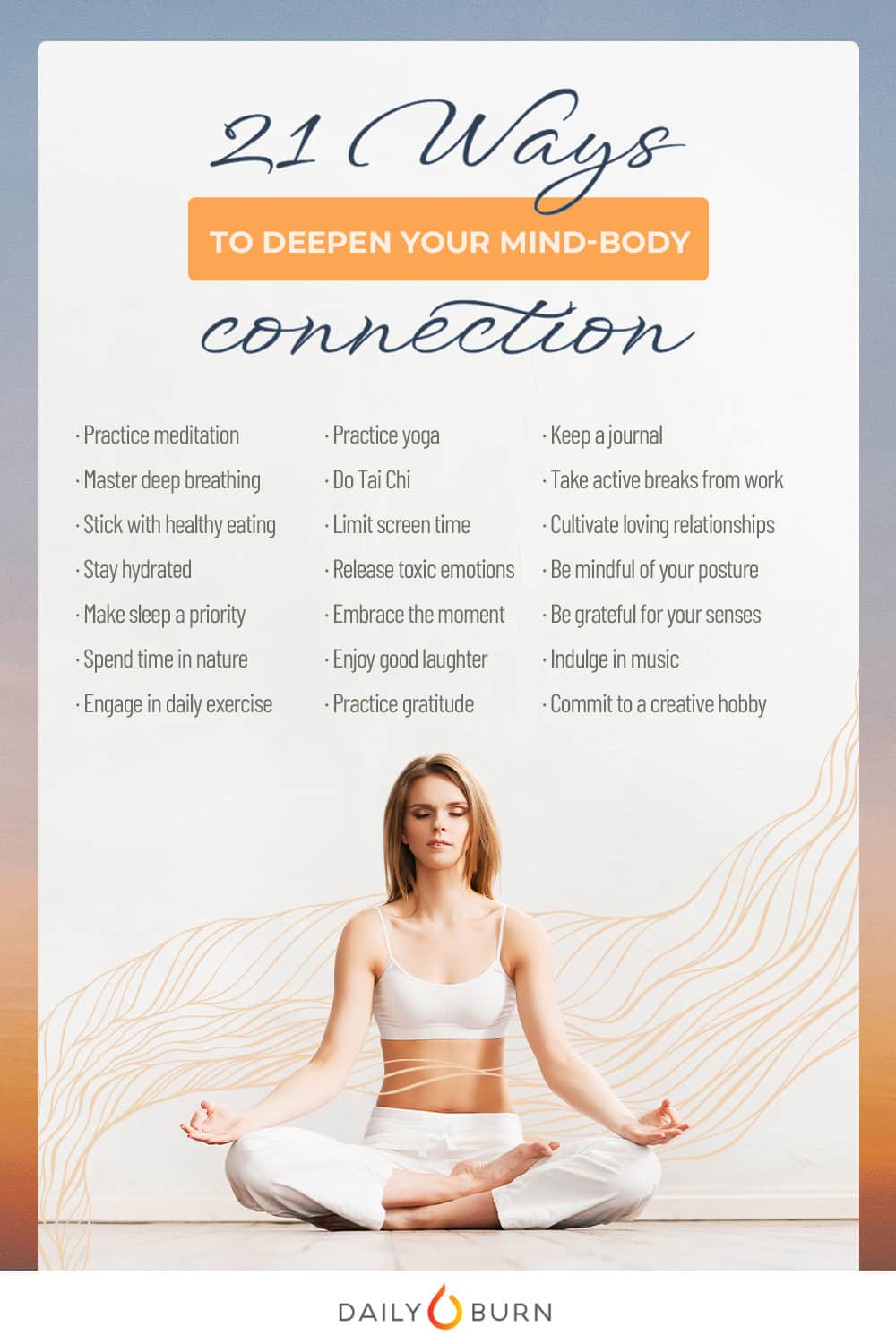
In conclusion, nurturing your mind-body connection is a vital aspect of achieving overall wellness. By practicing mindful eating, engaging in regular exercise, deep breathing, cultivating a meditation practice, prioritizing quality sleep, connecting with nature, practicing yoga or Tai Chi, engaging in creative expression, practicing gratitude, and seeking professional support when necessary, you can foster a deeper connection between your mind and body. These practices, when implemented with consistency and gentle self-care, can lead to a more balanced, vibrant, and fulfilling life. Remember, wellness is a journey, and by embracing these simple ways to encourage mind-body connection, you take a positive step towards a healthier and happier you.
