In today’s ever-evolving political landscape, healthcare policy plays a crucial role in shaping the well-being of individuals and societies at large. From conservative ideologies advocating for limited government intervention to liberal ideals championing universal access to healthcare, the influence of political ideologies on healthcare policy cannot be disregarded. In this article, we will explore how diverse political beliefs impact the decisions made regarding healthcare, ultimately determining the quality and accessibility of medical services for all.
Definition of Political Ideologies
Introduction to political ideologies
Political ideologies refer to sets of beliefs, values, and principles that shape people’s understanding of how societies should be organized and governed. These ideologies guide decisions and policies regarding various areas, including healthcare. Different political ideologies have distinct views on the role of government, individual rights, and the distribution of resources, which in turn impact healthcare policy.
Overview of major political ideologies
There are several major political ideologies that influence healthcare policy. These include conservative ideologies, progressive ideologies, libertarian ideologies, socialist ideologies, feminist ideologies, and religious beliefs. Each of these ideologies has its own unique characteristics and priorities when it comes to healthcare policy.
Healthcare Policy
Importance of healthcare policy
Healthcare policy plays a crucial role in determining access to healthcare services, quality of care, and the overall health outcomes of a population. It helps define the structure and functioning of healthcare systems, as well as the rules and regulations that govern healthcare delivery. Therefore, the formulation and implementation of healthcare policies are essential for addressing societal health needs and ensuring that everyone has the opportunity to lead a healthy life.
Goals of healthcare policy
The primary goals of healthcare policy vary across ideologies but generally include ensuring affordable and accessible healthcare for all citizens, promoting preventive care and wellness, improving the quality of healthcare services, and addressing health disparities among different socio-economic groups. However, the emphasis placed on each goal can differ significantly based on the underlying political ideology.
Influence of Political Ideologies on Healthcare Policy
Role of political ideologies in shaping healthcare policy
Political ideologies significantly shape healthcare policy because they reflect the fundamental values and beliefs held by individuals and groups. These ideologies serve as guiding principles for policymakers when making decisions about healthcare systems, funding, and the allocation of resources. By understanding the dominant political ideology, one can predict and analyze the approach taken by policymakers to address healthcare challenges.
Examples of political ideologies affecting healthcare policy
Political ideologies have historically influenced healthcare policy in various ways. For example, in the United States, conservative ideologies have traditionally emphasized a limited government role in healthcare, emphasizing individual responsibility and market-based solutions. Progressive ideologies, on the other hand, have advocated for government intervention to ensure universal healthcare access and reduce health inequalities. These examples demonstrate how political ideologies shape healthcare policy both domestically and internationally.
Conservative Ideologies and Healthcare Policy
Characteristics of conservative ideologies
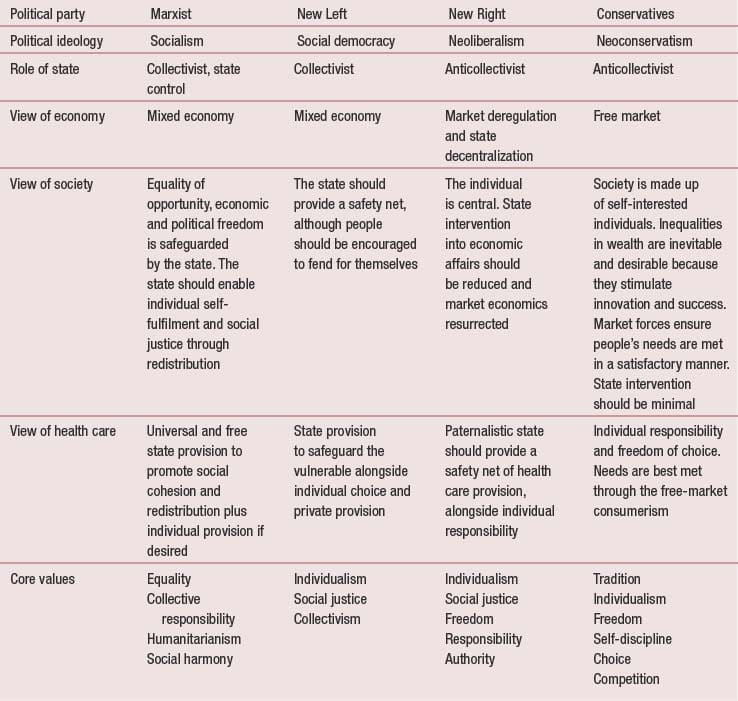
Conservative ideologies generally prioritize personal freedom, individual responsibility, and limited government intervention. They advocate for free markets, minimal regulations, and the preservation of traditional values. In the context of healthcare policy, conservatives often promote private healthcare options, individual choice, and market-driven solutions. They argue that reducing government involvement will lead to greater efficiency, innovation, and cost-effectiveness.
Conservative ideologies’ impact on healthcare policy
Conservative ideologies have had a significant impact on healthcare policy in countries such as the United States. Their emphasis on limited government intervention has influenced the structure of healthcare systems, the role of private insurance, and the focus on individual choice. However, critics argue that conservative healthcare policy can result in inequities, as those with lower incomes may struggle to afford necessary care. Moreover, the reliance on market forces can prioritize profitability over the well-being of individuals and communities.
Progressive Ideologies and Healthcare Policy
Characteristics of progressive ideologies
Progressive ideologies emphasize social justice, equality, and collective responsibility. They advocate for government intervention to address socioeconomic disparities and ensure that basic needs, including healthcare, are met. Progressives argue that healthcare is a fundamental right and should be accessible to all, regardless of income or social status. They favor a more comprehensive and inclusive healthcare system that provides coverage for all citizens.
Progressive ideologies’ impact on healthcare policy
Progressive ideologies have played a significant role in shaping healthcare policy in many countries. Their focus on universal access and social safety nets has led to the establishment of publicly funded healthcare systems, such as the National Health Service (NHS) in the United Kingdom. These systems prioritize equitable access to healthcare services and aim to reduce health inequalities. However, critics argue that progressive healthcare policy can be costly and may require higher taxation or government expenditure.
Libertarian Ideologies and Healthcare Policy
Characteristics of libertarian ideologies
Libertarian ideologies prioritize individual liberty, limited government intervention, and free markets. They argue that individuals should have the freedom to make their own healthcare choices, including whether or not to purchase insurance. Libertarians generally oppose government regulation and funding of healthcare, favoring a purely market-based approach. They believe that free competition will drive down costs and improve the quality of healthcare services.
Libertarian ideologies’ impact on healthcare policy
Libertarian ideologies have influenced healthcare policy debates, particularly in countries with more market-oriented systems. Their emphasis on individual choice and minimal government intervention has influenced policies promoting private healthcare options and reducing regulations. However, critics argue that this approach can result in unequal access to care, as it may exclude those who cannot afford private insurance. Additionally, reliance on market forces may lead to fragmented and inefficient healthcare systems.
Socialist Ideologies and Healthcare Policy
Characteristics of socialist ideologies
Socialist ideologies advocate for collective ownership, economic equality, and state intervention in different sectors, including healthcare. They argue that healthcare should be a public good provided by the government, rather than a commodity for profit. Socialists prioritize equitable access to healthcare services and often advocate for universal healthcare systems. They believe that healthcare should be funded through progressive taxation, ensuring that wealthier individuals contribute more.
Socialist ideologies’ impact on healthcare policy
Socialist ideologies have had a profound impact on healthcare policy in many countries. The establishment of publicly funded and universally accessible healthcare systems, such as Canada’s single-payer model, reflects socialist principles. They aim to reduce health disparities by ensuring that everyone has equal access to healthcare services, regardless of their socio-economic background. Critics argue that socialist healthcare policy may lead to long waiting times for certain procedures and limit individual choice in selecting healthcare providers.
Feminist Ideologies and Healthcare Policy
Characteristics of feminist ideologies
Feminist ideologies focus on gender equality and the recognition of women’s rights. In the context of healthcare policy, feminists highlight the importance of reproductive health and rights, addressing gender-based violence, and promoting equitable access to healthcare services for women. They argue for policy reforms that eliminate gender disparities in healthcare outcomes and ensure that women’s healthcare needs are adequately met.
Feminist ideologies’ impact on healthcare policy
Feminist ideologies have played a significant role in influencing healthcare policy in areas related to reproductive health and rights. Policies addressing gender-based violence, promoting sexual education, providing access to contraception, and supporting women’s health clinics have been shaped by feminist perspectives. Moreover, feminists advocate for a gender-sensitive approach to healthcare policy, recognizing that women’s experiences and health needs differ from those of men.
Religious Beliefs and Healthcare Policy
Influence of religious beliefs on healthcare policy
Religious beliefs can profoundly impact healthcare policy, as they often shape individual and societal values regarding issues such as contraception, abortion, end-of-life care, and medical research. Some religious groups advocate for policies aligned with their moral and ethical teachings, influencing debates on these contentious healthcare topics. However, the impact of religious beliefs on healthcare policy can vary depending on the extent of the separation between religion and the state.
Interplay between political ideologies and religious beliefs
The interplay between political ideologies and religious beliefs can lead to complex dynamics in healthcare policy. In some cases, religious beliefs align with specific political ideologies and reinforce certain policy positions. However, there are also instances where religious beliefs intersect with multiple political ideologies or are in tension with prevailing political discourse. Balancing the right to religious freedom and the provision of equitable healthcare services can pose significant challenges for policymakers.
Public Opinion and Healthcare Policy
Public perception and its impact on shaping healthcare policy
Public opinion can influence the formulation and implementation of healthcare policies. Public perception of healthcare-related issues, such as cost, quality, access, and coverage, can shape political discourse and policymakers’ decision-making. Understanding public attitudes towards healthcare is crucial for designing policies that are responsive to the needs and preferences of the population.
Polling data and public opinion analysis
Polling data and public opinion analysis provide valuable insights into the attitudes and preferences of the public regarding healthcare policy. Surveys can gauge public support for different healthcare initiatives, identify areas of consensus or contention, and inform policymakers’ strategies. By incorporating public opinion data into policymaking processes, healthcare policies can be better aligned with the aspirations and values of the population.
In conclusion, political ideologies significantly influence healthcare policy. Conservative ideologies prioritize limited government intervention and individual responsibility, while progressive ideologies emphasize equal access to healthcare for all. Libertarian ideologies advocate for free markets and individual choice, while socialist ideologies prioritize collective ownership and universal healthcare. Feminist ideologies address gender disparities in healthcare, and religious beliefs can shape policy on contentious issues. Additionally, public opinion plays a crucial role in shaping healthcare policy by reflecting societal values and preferences. Understanding the influence of political ideologies and public opinion enables policymakers to design healthcare policies that best serve the needs of the population.