In today’s fast-paced and demanding world, it’s crucial to prioritize your mental and emotional well-being. And gentlemen, this one’s for you! Whether you’re facing work stress, relationship challenges, or simply looking to boost your overall well-being, we’ve got you covered. In this article, we’ll explore the top ways to improve men’s mental and emotional wellness, helping you find balance, foster healthy relationships, and navigate life’s ups and downs with ease. So, grab a seat, relax, and get ready to discover the key strategies that will empower you to become the best version of yourself.
Physical Exercise
Regular Workouts
Regular exercise is essential for maintaining good mental and emotional health. Engaging in physical activity releases endorphins, which are known as the “feel-good” hormones. By incorporating regular workouts into your routine, you can elevate your mood and reduce feelings of stress and anxiety. Whether it’s going for a jog, hitting the gym, or participating in a sports activity, find a form of exercise that you enjoy and make it a habit. Aim for at least 150 minutes of moderate-intensity exercise or 75 minutes of vigorous exercise each week.
A Combination of Cardio and Strength Training
To maximize the benefits of exercise, it is important to incorporate both cardiovascular and strength training exercises into your routine. Cardio workouts, such as running, cycling, or swimming, help improve heart health, burn calories, and enhance overall endurance. On the other hand, strength training exercises, such as weightlifting or bodyweight exercises, help build muscle strength and improve bone density. Aim for a balance between cardio and strength training to experience the full range of physical and mental benefits.
Outdoor Activities
Engaging in outdoor activities can have a significant positive impact on your mental and emotional well-being. Spending time in nature has been shown to reduce stress levels, enhance mood, and increase cognitive function. Whether it’s going for a hike, playing a sport in the park, or simply taking a walk in the neighborhood, make an effort to spend time outdoors regularly. Not only will it improve your mental health, but it will also provide an opportunity to connect with nature and enjoy the beauty of the world around you.
Yoga and Meditation
Yoga and meditation are powerful practices that can help improve both your physical and mental well-being. Yoga combines physical postures, breathing exercises, and mindfulness to promote relaxation and reduce stress. It can help increase flexibility, improve posture, and enhance overall strength. Meditation, on the other hand, focuses on cultivating a calm and focused state of mind. By practicing mindfulness and learning to quiet your thoughts, you can improve your ability to cope with stress, enhance self-awareness, and find inner peace. Consider incorporating yoga and meditation into your routine for a holistic approach to your mental and emotional wellness.
Healthy Diet
Balanced Meals
Maintaining a healthy and balanced diet is crucial for supporting your mental and emotional well-being. Aim to include a variety of nutrient-rich foods in your meals, such as fruits, vegetables, whole grains, lean proteins, and healthy fats. Avoid skipping meals and try to eat at regular intervals to stabilize your blood sugar levels and provide your body with a steady source of energy. By providing your body with the necessary nutrients, you can support optimal brain function and boost your mood.
Increase Intake of Fruits and Vegetables
Fruits and vegetables are packed with essential vitamins, minerals, and antioxidants that are beneficial for your mental and emotional health. These nutrient powerhouses help reduce inflammation in the body, support brain health, and boost your overall well-being. Aim to include a variety of colorful fruits and vegetables in your meals to ensure you are getting a wide range of nutrients. You can incorporate them into your diet by adding them to smoothies, salads, or simply enjoying them as snacks throughout the day.
Reduce Processed Food and Sugary Snacks
While indulging in processed foods and sugary snacks may provide temporary pleasure, they can have negative effects on your mental and emotional well-being. These types of foods are often high in refined sugars, unhealthy fats, and artificial additives, which can lead to mood swings, energy crashes, and increased inflammation in the body. Instead, opt for whole, unprocessed foods that nourish your body and provide long-lasting energy. Choose lean proteins, whole grains, and healthy fats to support your mental and emotional health.
Stay Hydrated
Drinking an adequate amount of water is essential for maintaining good mental and emotional health. Dehydration can negatively impact your mood, cognitive function, and overall well-being. Make it a habit to drink at least 8 cups (64 ounces) of water each day. Carry a water bottle with you to ensure you stay hydrated throughout the day. If you find plain water boring, you can infuse it with fruits or herbs to add flavor and make it more appealing. Additionally, limit your intake of sugary drinks and excessive caffeine, as they can dehydrate your body and have negative effects on your mental health.
Adequate Sleep
Establish a Sleep Routine
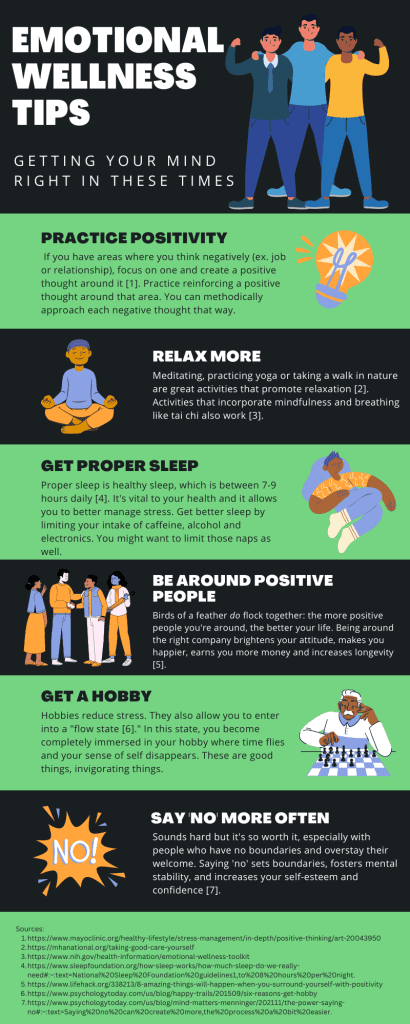
Creating a consistent sleep routine can have a significant impact on your mental and emotional well-being. By going to bed and waking up at the same time every day, you can regulate your body’s internal clock and improve the quality of your sleep. Aim for 7-9 hours of sleep per night to ensure your body has enough time to rest and rejuvenate. Avoid drastic changes in your sleep schedule, especially on weekends, as it can disrupt your sleep patterns and leave you feeling groggy and fatigued.
Create a Comfortable Sleep Environment
Creating a comfortable sleep environment is essential for getting a good night’s rest. Make sure your bedroom is cool, dark, and quiet. Use blackout curtains or an eye mask to block out any unwanted light. Invest in a comfortable mattress and pillows that support your body and promote good sleep posture. Remove any distractions, such as electronic devices or noisy appliances, from your bedroom. By creating a sleep-friendly environment, you can optimize the quality of your sleep and wake up feeling refreshed and energized.
Avoid Electronic Devices Before Bed
The blue light emitted by electronic devices, such as smartphones, tablets, and laptops, can interfere with your sleep patterns. It suppresses the production of melatonin, a hormone that is responsible for regulating sleep-wake cycles. To ensure a restful night’s sleep, avoid using electronic devices at least 30 minutes before bed. Instead, engage in relaxing activities such as reading a book, taking a warm bath, or practicing gentle stretching exercises. This will help signal to your body that it is time to wind down and prepare for sleep.
Limit Caffeine Intake
Caffeine is a stimulant that can interfere with your ability to fall asleep and stay asleep. It can increase alertness, boost energy levels, and disrupt your natural sleep-wake cycle. To promote better sleep, limit your caffeine intake, especially in the afternoon and evening. Be mindful of hidden sources of caffeine, such as energy drinks, certain teas, and chocolate. Instead, opt for caffeine-free herbal teas or warm milk before bedtime. By reducing your caffeine consumption, you can improve the quality of your sleep and support your mental and emotional well-being.
Stress Management
Identify Stress Triggers
Knowing what triggers your stress is the first step in effectively managing it. Take the time to identify the situations, events, or people that consistently cause stress in your life. Keep a stress journal or take notes when you feel overwhelmed or anxious. By identifying your stress triggers, you can develop strategies to avoid or cope with them better in the future.
Practice Relaxation Techniques
Engaging in relaxation techniques can help alleviate stress and promote a sense of calm. Deep breathing, progressive muscle relaxation, and guided imagery are all effective techniques that can help you relax your body and mind. Find a relaxation technique that resonates with you and make it a regular part of your routine. It can be as simple as taking a few deep breaths during stressful situations or setting aside time for a longer relaxation exercise, such as meditation or a hot bath.
Take Breaks and Vacations
Taking regular breaks and vacations is essential for maintaining good mental and emotional well-being. Allow yourself time to recharge and rejuvenate by taking short breaks throughout the day. Step away from work or other responsibilities and engage in activities that bring you joy or help you relax. Additionally, plan and take vacations to completely disconnect from your daily routine and give yourself permission to unwind and enjoy life. Taking breaks and vacations can help reduce stress, improve productivity, and enhance overall happiness.
Seek Support and Counseling
If stress becomes overwhelming or starts to interfere with your daily life, don’t hesitate to seek support from a mental health professional. Talking to a counselor or therapist can provide you with the tools and strategies to manage stress effectively. They can help you explore the root causes of your stress, develop coping mechanisms, and work towards a healthier and more balanced life. Seeking support is a sign of strength and shows that you are prioritizing your mental and emotional well-being.

Social Connection
Maintain Healthy Relationships
Building and maintaining healthy relationships is crucial for your mental and emotional well-being. Surround yourself with people who uplift and support you. Nurture your existing relationships by spending quality time with loved ones, communicating openly and honestly, and showing appreciation for those you care about. Healthy relationships can provide a sense of belonging, support, and connection, all of which are essential for your overall well-being.
Join Social Clubs or Organizations
Joining social clubs or organizations that align with your interests and values is a great way to meet like-minded individuals and expand your social circle. Whether it’s a sports team, book club, community group, or professional organization, engaging in group activities can provide a sense of belonging and camaraderie. These social connections can help reduce feelings of loneliness, improve your self-esteem, and provide opportunities for personal growth and development.
Engage in Group Activities
Participating in group activities can have a positive impact on your mental and emotional well-being. It allows you to connect with others who share similar interests and passions, fostering a sense of community and belonging. Join a sports team, take a group fitness class, or participate in a hobby-based club. Engaging in group activities not only provides a social outlet but also promotes physical health and overall well-being.
Volunteer and Help Others
Helping others can be a fulfilling and rewarding experience that can significantly improve your mental and emotional well-being. Look for volunteer opportunities in your community or find ways to lend a helping hand to those in need. Whether it’s volunteering at a local shelter, mentoring a young person, or participating in a charity event, giving back can provide a sense of purpose and connection. It allows you to make a positive impact on the lives of others while also benefiting your own well-being.
Hobbies and Interests
Find Activities That Bring Joy
Engaging in activities that bring you joy is essential for your mental and emotional well-being. Take the time to explore your interests and identify activities that truly make you happy. It can be anything from playing a musical instrument, painting, gardening, or even playing video games. Make a conscious effort to incorporate these activities into your routine and prioritize time for self-enjoyment and self-expression.
Try New Hobbies and Learn New Skills
Stepping out of your comfort zone and trying new hobbies or learning new skills can be incredibly beneficial for your mental and emotional well-being. It allows you to expand your horizons, challenge yourself, and discover hidden talents or passions. Take a cooking class, learn a new language, or pick up a new sport. Embrace the opportunity to grow and evolve as an individual by pursuing new interests and continuously learning.
Join Hobby-Based Communities
Joining hobby-based communities or clubs is a great way to connect with like-minded individuals who share similar interests. Whether it’s joining a book club, attending a knitting group, or participating in a photography workshop, being part of a community can provide a sense of belonging and support. It allows you to share your passion with others, exchange ideas, and foster new friendships. Joining hobby-based communities can enhance your overall well-being by providing a platform for self-expression and personal growth.
Take Time for Self-Expression
Engaging in activities that allow for self-expression is crucial for your mental and emotional well-being. Find a creative outlet that resonates with you, whether it’s writing, painting, dancing, or singing. Take the time to express your thoughts, emotions, and ideas in a way that feels authentic to you. This self-expression can help release emotions, reduce stress, and promote a sense of fulfillment. Allow yourself the freedom to be creative and embrace the unique qualities that make you who you are.
Mindfulness and Self-Reflection
Practice Self-Awareness
Developing self-awareness is key to improving your mental and emotional well-being. Take the time to reflect on your thoughts, emotions, and behaviors. Notice patterns and triggers that may affect your mood or well-being. By being aware of your internal experience, you can better understand yourself and make conscious choices that align with your values and goals. Cultivating self-awareness takes time and practice, but it is a powerful tool for personal growth and emotional resilience.
Engage in Mindful Activities
Mindfulness is a practice that involves paying attention to the present moment with a non-judgmental and accepting attitude. Engaging in mindful activities, such as meditation, deep breathing exercises, or mindful walking, can help reduce stress and anxiety, improve focus, and promote emotional well-being. Set aside time each day to engage in a mindful practice that resonates with you. Start with just a few minutes and gradually increase the duration as you become more comfortable.
Journaling and Self-Reflection
Journaling is a powerful tool for self-reflection and emotional processing. Take the time to write down your thoughts, feelings, and experiences in a journal or notebook. This can help you gain clarity, process emotions, and identify patterns or areas for growth. Set aside a few minutes each day to reflect on your day and record your thoughts. You can also use journaling as a way to express gratitude, set goals, or explore your dreams and aspirations.
Set Personal Goals and Track Progress
Setting personal goals is an effective way to improve your mental and emotional well-being. Whether it’s setting small, achievable goals or bigger, long-term goals, having something to work towards can provide a sense of purpose and motivation. Set goals that align with your values and aspirations and break them down into actionable steps. Track your progress regularly and celebrate even the smallest victories. This will help keep you motivated and focused on your journey of personal growth and self-improvement.
Seeking Professional Help
Therapy and Counseling
If you are struggling with your mental and emotional well-being, seeking professional help in the form of therapy or counseling can be extremely beneficial. A trained therapist or counselor can provide you with a safe and non-judgmental space to explore your thoughts, emotions, and challenges. They can help you develop coping strategies, identify unhealthy patterns, and support you in making positive changes in your life. Don’t hesitate to reach out for help if you feel overwhelmed or in need of additional support.
Psychiatry and Medication
In some cases, medication prescribed by a psychiatrist may be necessary to manage mental health conditions such as depression, anxiety, or bipolar disorder. If you have been diagnosed with a mental health condition or are experiencing severe symptoms, consulting with a psychiatrist can help determine if medication is a suitable option for you. Medication, when combined with therapy and other lifestyle changes, can be a powerful tool in managing mental health conditions and improving overall well-being.
Support Groups
Support groups provide a valuable source of support and connection for individuals facing similar challenges. Whether it’s a support group for addiction, grief, or a specific mental health condition, joining a support group can provide a sense of community, understanding, and validation. It allows you to share your experiences, learn from others, and receive support from individuals who can relate to your struggles. Seek out local support groups or online communities that align with your needs and interests.
Mental Health Helplines
If you’re in need of immediate support or someone to talk to, mental health helplines can provide a listening ear and helpful resources. Helplines are staffed with trained professionals who can offer support, guidance, and referrals to appropriate resources. Keep a list of helpline numbers accessible in case you or someone you know is in crisis or in need of immediate assistance. Remember that reaching out for help is a sign of strength and there are people available to support you.

Limiting Substance Use
Moderation in Alcohol Consumption
While moderate alcohol consumption may be acceptable for some individuals, excessive or regular alcohol use can have negative effects on your mental and emotional well-being. Alcohol is a depressant that can worsen symptoms of depression, anxiety, and other mental health conditions. It can also interfere with your sleep patterns, disrupt your relationships, and hinder your ability to cope with stress. Be mindful of your alcohol intake and aim to drink in moderation. If you find that alcohol is negatively impacting your mental health or daily life, consider seeking professional help.
Avoiding Recreational Drugs
Recreational drugs, such as marijuana, cocaine, or opioids, can have severe negative effects on your mental and emotional well-being. These substances can lead to addiction, exacerbate symptoms of mental health conditions, and impair your judgment and decision-making abilities. It is essential to avoid recreational drug use and seek help if you are struggling with addiction or substance abuse. Reach out to a healthcare professional or a support group that specializes in addiction recovery.
Quitting Smoking
Smoking tobacco not only has detrimental effects on your physical health but also on your mental and emotional well-being. Nicotine is a highly addictive substance that can increase feelings of anxiety, depression, and stress. It can also interfere with your sleep patterns and reduce your ability to focus and concentrate. Quitting smoking is a challenging but worthwhile endeavor. Seek out smoking cessation programs, nicotine replacement therapies, or support groups to help you kick the habit. Quitting smoking will not only improve your mental and emotional well-being but also your overall physical health.
Seeking Help for Addiction
If you are struggling with addiction to substances or behaviors, it is important to seek professional help. Addiction is a complex and challenging condition that requires support and specialized treatment. Reach out to a healthcare professional or addiction specialist to discuss your options and develop a treatment plan that suits your needs. Remember that overcoming addiction is a journey, and with the right support and resources, recovery is possible.
Positive Thinking
Challenge Negative Thoughts
Our thoughts have a profound impact on our mental and emotional well-being. Challenging negative thoughts and reframing them in a more positive light can help improve our overall outlook on life. Take notice of negative self-talk or automatic negative thoughts and consciously challenge them. Replace negative thoughts with positive affirmations or more realistic and balanced perspectives. Adopting a more positive mindset can help reduce stress, increase self-confidence, and enhance overall well-being.
Practice Gratitude
Cultivating a sense of gratitude is a powerful tool for improving mental and emotional well-being. Take the time each day to reflect on the things you are grateful for, whether it’s the support of loved ones, good health, or a beautiful sunset. Keep a gratitude journal or make it a habit to share your gratitude with others. By focusing on the positive aspects of your life, you can shift your perspective and foster a greater sense of happiness and contentment.
Affirmations and Self-Talk
Positive affirmations and self-talk can have a significant impact on your mental and emotional well-being. Engage in positive self-talk by reminding yourself of your strengths, achievements, and capabilities. Use affirmations, such as “I am worthy” or “I am resilient,” to reinforce positive beliefs about yourself. Surround yourself with positive influences, whether it’s reading uplifting books, listening to inspiring podcasts, or spending time with supportive individuals. By consciously shifting your self-talk to be more positive and affirming, you can improve your self-esteem and overall well-being.
Visualize Success and Happiness
Visualization is a powerful technique that can help improve your mental and emotional well-being. Take the time to visualize your goals, dreams, and aspirations in vivid detail. Imagine how it would feel to achieve success and happiness. Create mental images of yourself overcoming challenges and living a fulfilling life. Visualization can help motivate you, increase your confidence, and attract positive experiences into your life. By visualizing success and happiness, you can create a positive mindset and work towards turning your aspirations into reality.
Incorporating these top ways to improve men’s overall mental and emotional wellness can greatly enhance your well-being. Remember, it is important to prioritize your mental and emotional health just as you would your physical health. By taking proactive steps towards self-care, seeking support when needed, and making positive lifestyle choices, you can cultivate a stronger sense of well-being and lead a happier, more fulfilling life.