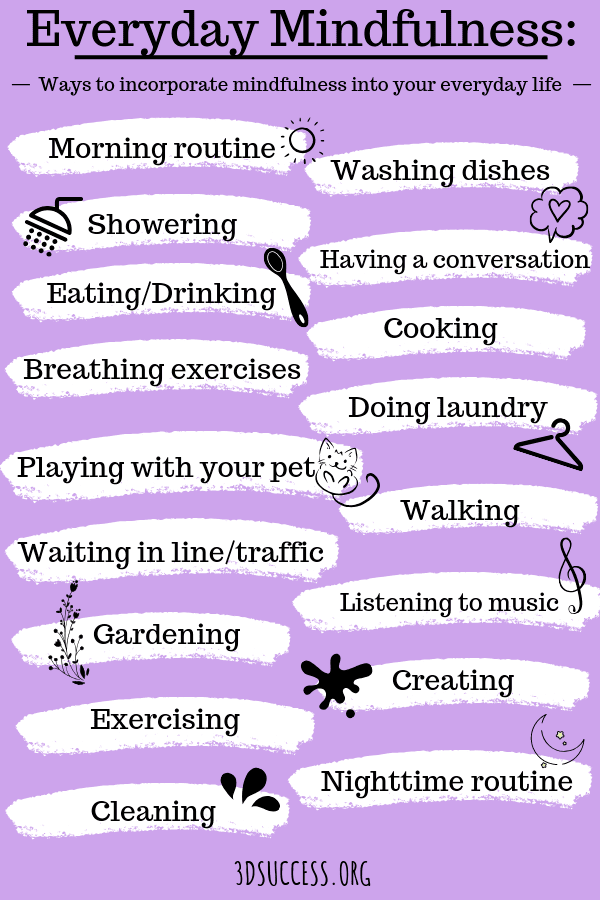
Improve your overall well-being and find peace within yourself by incorporating holistic mindfulness into your daily routine. This article explores the various ways in which you can practice mindfulness during everyday activities, helping you cultivate a deeper connection with your mind, body, and surroundings. From mindful eating to walking meditation, discover simple yet effective techniques that will enhance your life and bring a sense of tranquility to each moment.
1. Breathing Exercises
Breathing exercises are a simple yet powerful way to bring mindfulness into your everyday activities. By focusing on your breath, you can anchor yourself in the present moment and cultivate a sense of calm and relaxation. Here are three breathing exercises to try:
Deep Breathing
Deep breathing is a foundational mindfulness practice that can be done anytime, anywhere. Find a comfortable seated position, close your eyes, and take a slow, deep breath in through your nose, filling your belly with air. Hold for a moment, and then exhale slowly through your mouth, letting go of any tension or stress. Continue this deep breathing pattern for a few minutes, paying attention to the sensation of the breath as it enters and leaves your body.
Counting Breaths
Counting breaths is a mindfulness technique that helps bring focus and stillness to the mind. Start by sitting or lying down in a comfortable position. Take a deep breath in, and as you exhale, silently count “one” in your mind. On the next exhale, count “two,” and continue counting up to ten. If your mind begins to wander, gently bring your attention back to the breath and start the counting over again. This practice helps to anchor your awareness in the present moment and promotes a sense of inner calm.
Alternate Nostril Breathing
Alternate nostril breathing, also known as Nadi Shodhana, is a breathing technique that balances the flow of energy in the body and improves focus and mental clarity. Start by sitting in a comfortable position, and use your right thumb to close your right nostril. Take a deep breath in through your left nostril, and then use your right ring finger to close your left nostril as you release the right nostril and exhale. Inhale through the right nostril, close it with your thumb, and exhale through the left nostril. Repeat this cycle for several minutes, focusing on the sensation of the breath moving in and out of each nostril.
2. Mindful Eating
Mindful eating is a practice that involves bringing awareness and attention to the act of eating, allowing you to fully experience and enjoy your food. By practicing mindful eating, you can develop a more positive relationship with food and cultivate a sense of gratitude for nourishment. Here are three tips to incorporate mindful eating into your daily life:
Engage All Senses
Before taking your first bite, take a moment to appreciate the visual presentation of your meal. Notice the colors, textures, and shapes of the food on your plate. As you begin eating, pay attention to the flavors and textures in your mouth. Chew slowly and savor each bite, fully experiencing the taste and sensation of the food. By engaging all of your senses, you can bring a heightened level of awareness to your eating experience.
Chew Slowly and Savor
Many of us have a tendency to eat quickly and mindlessly, but by slowing down and savoring each bite, we can fully enjoy the taste and texture of our food. Take the time to chew each bite thoroughly, paying attention to the sensations in your mouth. Notice the flavors evolving as you chew and allow yourself to fully experience the satisfaction of each mouthful. This practice brings a sense of mindfulness and appreciation to your meals.
Observe Thoughts and Feelings
As you eat, be mindful of any thoughts or emotions that arise. Notice any judgments or cravings that come up and simply observe them without judgment. Remember that there are no right or wrong thoughts or feelings when it comes to mindful eating. By cultivating a non-judgmental attitude towards your eating experience, you can develop a healthier and more positive relationship with food.

3. Body Scan Meditation
The body scan meditation is a mindfulness practice that involves systematically bringing awareness to different parts of your body, allowing you to connect with your physical sensations and release tension. It is best done in a comfortable lying or seated position. Here’s how to practice the body scan meditation:
Lie or Sit Comfortably
Find a comfortable position either lying down or sitting upright. Close your eyes and take a few deep breaths to center yourself and bring your attention to the present moment. Allow your body to relax and let go of any areas of tension or discomfort.
Bring Awareness to Different Body Parts
Start by bringing your attention to your feet. Notice any sensations in your toes, the soles of your feet, and your heels. Slowly move your attention up to your ankles, shins, and calves, and continue scanning your body part by part, paying attention to any sensations you encounter along the way. Progressively move through your knees, thighs, hips, abdomen, chest, shoulders, arms, hands, neck, and head.
Notice Sensations and Release Tension
As you scan each body part, observe any sensations that arise, whether they are feelings of warmth, tension, or relaxation. If you notice any areas of tension or discomfort, consciously release the tension and invite relaxation to flow into those areas. Imagine your breath flowing into those areas, nourishing and soothing them.
By regularly practicing the body scan meditation, you can develop a greater awareness of your body, release physical tension, and enhance your overall sense of well-being.
4. Mindful Walking
Mindful walking is a simple yet effective way to incorporate mindfulness into your daily life. It involves bringing your attention fully to the experience of walking, allowing you to engage with your body and environment in a more conscious and present way. Here are three steps to practice mindful walking:
Focus on Each Step
As you begin walking, bring awareness to the sensation of your feet touching the ground. Notice the shifting weight from one foot to the other, the feeling of your heel coming into contact with the surface, and the gentle pressure on the balls of your feet. Pay attention to the movement of your legs and the subtle shifts in your body as you take each step.
Feel the Ground beneath Your Feet
As you continue walking, bring your attention to the sensation of the ground beneath your feet. Notice the texture, temperature, and firmness or softness of the surface. Allow yourself to fully connect with the earth beneath you, feeling the support it provides with each step.
Observe Surroundings without Judgment
While you walk, take the opportunity to observe your surroundings without judgment. Notice the colors, shapes, and textures of the objects around you. Listen to the sounds of nature, the city, or whatever environment you find yourself in. Allow yourself to be fully present and open to the experience of walking, appreciating the richness and diversity of your environment.
By practicing mindful walking, you can bring greater awareness and appreciation to your daily movements, creating opportunities for relaxation, gratitude, and connection with the present moment.
5. Mindful Listening
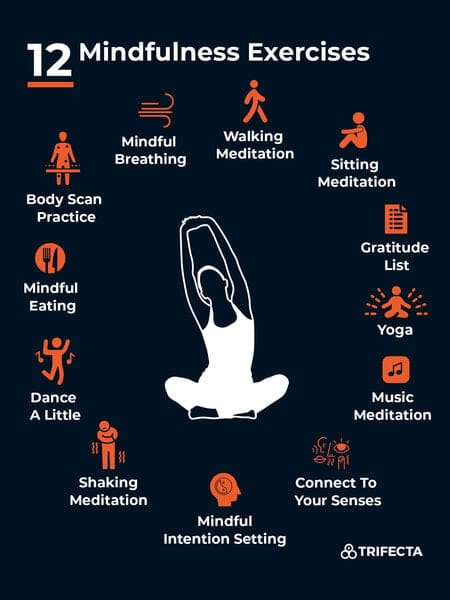
Mindful listening is a practice that involves fully engaging with the sounds around you, bringing your attention to the present moment and cultivating a sense of deep presence. Here are three steps to practice mindful listening:
Pay Attention to Sounds
Find a quiet place to sit and close your eyes. Bring your attention to the sounds in your environment, both near and far. Notice the subtle sounds that often go unnoticed, such as the hum of your refrigerator or the rustle of leaves outside. Pay attention to each sound as it arises, allowing it to come and go without judgment or attachment.
Notice Different Layers of Sound
As you listen, begin to notice the different layers of sound. Observe the individual components that make up the overall soundscape, such as the high-pitched chirping of birds or the low rumble of traffic. Allow your awareness to move effortlessly from one sound to another, taking in the richness and complexity of the auditory experience.
Connect with the Present Moment
As you become more attuned to the sounds around you, allow yourself to fully immerse in the present moment. Let go of any thoughts or distractions and simply be with the sounds, allowing them to nourish your senses and bring you into a state of deep presence. By cultivating mindful listening, you can deepen your connection with the world around you and enhance your overall sense of well-being.
6. Gratitude Practice
Gratitude is a powerful tool for cultivating mindfulness and enhancing your overall sense of well-being. By focusing on the things you are grateful for, you can shift your attention away from negativity and cultivate a more positive outlook on life. Here are three ways to incorporate gratitude into your daily routine:
Reflect on Things to Be Grateful for
Take a few moments each day to reflect on the things you are grateful for. It could be something as simple as a hot cup of coffee in the morning or a roof over your head. Cultivate a mindset of appreciation and bring to mind the people, experiences, and things that bring you joy and comfort.
Write in a Gratitude Journal
Start a gratitude journal and make it a habit to write down three things you are grateful for each day. This practice helps to shift your focus towards the positive aspects of your life and encourages a sense of mindfulness and appreciation. By consistently acknowledging and recording your gratitude, you can train your mind to naturally gravitate towards positivity and abundance.
Express Gratitude to Others
Take the time to express your gratitude to the people in your life. Whether it’s a heartfelt thank-you note, a kind word, or a small act of kindness, reaching out to express your appreciation can deepen your connections and bring joy and positivity into the lives of others. By consciously practicing gratitude towards others, you can cultivate stronger, more meaningful relationships and contribute to a more compassionate and caring world.
7. Mindful Journaling
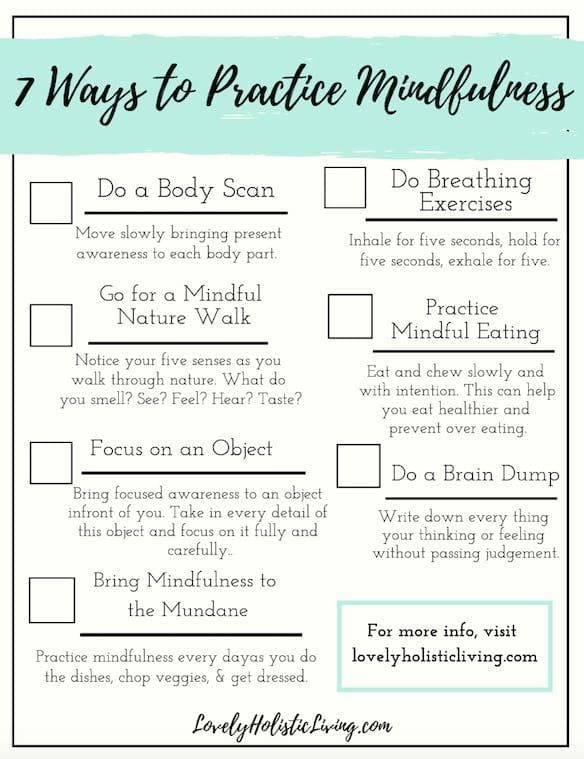
Mindful journaling is a practice that involves writing without judgment, exploring your thoughts and emotions, and practicing self-reflection. Here are three steps to help you get started with mindful journaling:
Write without Judgment
When journaling mindfully, let go of any expectations or judgments about your writing. Allow your thoughts and emotions to flow onto the page without filtering or censoring. Remember that there are no right or wrong answers when it comes to your journaling practice. Trust in the wisdom of your own words and embrace the process of self-expression.
Explore Thoughts and Emotions
Use your writing as an opportunity to explore your thoughts, emotions, and experiences. Dig deep and reflect on what is truly important to you. Ask yourself meaningful questions that encourage self-reflection and growth. As you write, pay attention to the sensations in your body and the emotions that arise. Your journal can serve as a safe space to process and make sense of your inner world.
Practice Self-Reflection
Regularly review and reflect on your journal entries. Look for patterns, insights, and common themes that arise in your writing. Use this information to gain a deeper understanding of yourself and your experiences. Take note of any areas where you would like to grow or make changes in your life. By practicing self-reflection through mindful journaling, you can develop a greater sense of self-awareness and personal growth.
8. Mindful Communication
Mindful communication is an essential aspect of holistic mindfulness, as it involves listening fully, speaking mindfully, and connecting with empathy. Here are three practices to help you cultivate mindful communication:
Listen Fully
When engaging in a conversation, make a conscious effort to listen fully and attentively. Put aside distractions and be present for the person speaking to you. Give them your undivided attention and truly hear what they are saying. Avoid interrupting or formulating a response in your mind while the other person is still speaking. Instead, focus on understanding their perspective and empathizing with their experiences.
Speak Mindfully
Before speaking, take a moment to pause and cultivate mindfulness. Consider your words and their potential impact. Speak with intention, choosing your words thoughtfully and speaking from a place of kindness and understanding. Be aware of your tone and body language, paying attention to cues that may affect the message you are conveying. By speaking mindfully, you can foster deeper connections, enhance understanding, and avoid unnecessary conflicts or misunderstandings.
Connect with Empathy
Empathy is an essential element of mindful communication. Put yourself in the shoes of the person you are speaking with and try to understand their point of view. Be open to different perspectives and resist the urge to judge or criticize. Show genuine care and concern for the well-being of others and strive to foster positive and meaningful connections in your interactions. By cultivating empathy in your communication, you can build stronger relationships and create a more compassionate and understanding world.
9. Mindful Work
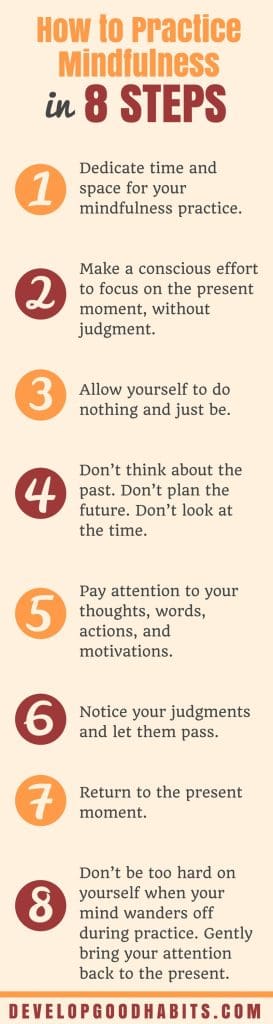
Practicing mindfulness in the workplace can lead to increased focus, productivity, and overall well-being. Here are three ways to bring mindfulness into your workday:
Single-Tasking
One of the most common challenges in the modern workplace is the tendency to multitask. However, research has shown that multitasking can actually decrease productivity and increase stress levels. Instead, try practicing single-tasking, focusing fully on one task at a time. Give it your complete attention and resist the urge to switch between tasks. By dedicating your full attention to each task, you can improve your efficiency and reduce stress.
Take Breaks for Mindful Moments
Incorporating mindful breaks throughout your workday can provide a much-needed reset for your mind and body. Take short breaks to engage in a quick breathing exercise, stretch, or simply sit quietly and observe your breath. Use these moments of mindfulness to bring yourself back to the present moment and cultivate a sense of calm and focus. By incorporating these mindful moments into your workday, you can improve your overall well-being and enhance your ability to be fully present and engaged in your work.
Cultivate a Positive Work Environment
Creating a positive work environment is crucial for overall well-being and productivity. Practice kindness, respect, and gratitude towards your colleagues. Foster a culture of open communication and collaboration. Encourage breaks and moments of mindfulness throughout the workday. By cultivating a positive work environment, you can enhance your own well-being as well as that of your colleagues, creating a harmonious and productive atmosphere.
10. Mindful Self-Care
Self-care is essential for maintaining overall well-being, and practicing mindfulness can greatly enhance the effectiveness and benefits of self-care activities. Here are three ways to practice mindful self-care:
Prioritize Self-Care Activities
Make self-care a priority in your daily routine. Set aside dedicated time each day to engage in activities that nourish your mind, body, and soul. This could include activities such as meditation, exercise, hobbies, or spending time in nature. By making self-care a priority, you send a clear message to yourself and others that your well-being matters.
Practice Mindfulness during Self-Care Routines
Approach your self-care activities with mindfulness and presence. Whether you’re taking a bath, enjoying a cup of tea, or practicing yoga, bring your full attention to the experience. Notice the sensations, sounds, and emotions that arise during your self-care routine. Use this time to connect with yourself on a deeper level and cultivate a sense of relaxation and rejuvenation.
Treat Yourself with Kindness and Compassion
Above all, practice self-compassion and kindness. Treat yourself with love and understanding, just as you would treat a dear friend. Notice any negative self-talk or self-criticism that arises and gently redirect your thoughts towards self-compassion. Embrace the imperfections and challenges of life with kindness and remind yourself that you are doing the best you can. By cultivating self-compassion, you can create a solid foundation of self-care and well-being.
Incorporating holistic mindfulness into your everyday activities can have a profound impact on your overall well-being. By practicing breathing exercises, mindful eating, body scan meditation, mindful walking, mindful listening, gratitude, mindful journaling, mindful communication, mindful work, and mindful self-care, you can cultivate a greater sense of presence, awareness, and appreciation in every aspect of your life. Start small, be patient with yourself, and enjoy the journey of exploring and integrating these practices into your daily routine. Remember, mindfulness is not about perfection but about embracing the present moment with an open heart and mind.